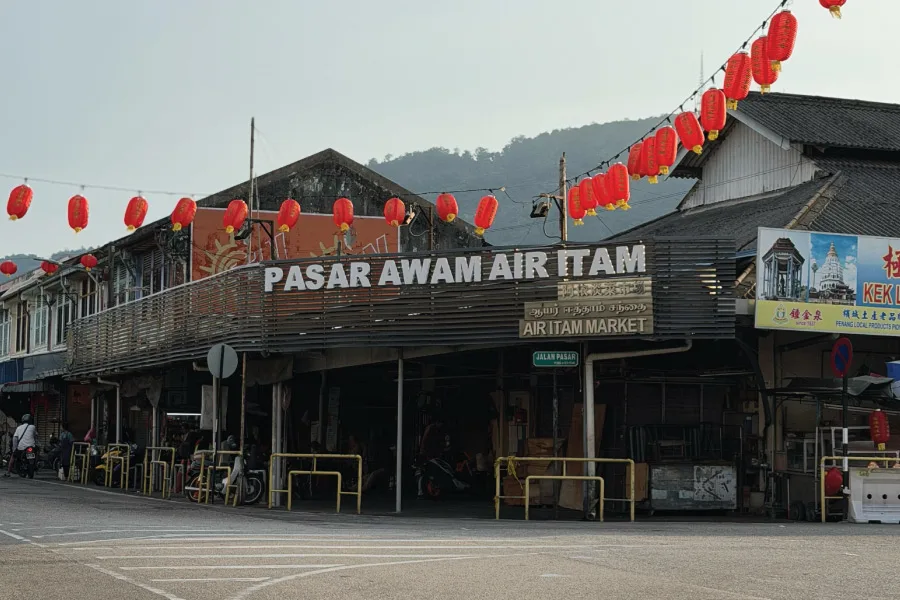
At a Malaysian morning market, the kuih table can be easier to recognise than to order from. There are green squares with white tops, pink cakes shaped like tortoise shells and little coconut-covered balls that look innocent until the palm sugar bursts on the first bite. By mid-afternoon, the question might be whether to get cendol or ais kacang. Both come over shaved ice, but they taste quite different.
Start with onde-onde, seri muka and kuih lapis for three very different textures, then try cendol for a bowl of shaved ice with coconut milk and palm sugar. If you’re in Melaka, add gula Melaka-coated kuih keria or a warm putu piring. The best first order is a few pieces to share, so everyone gets to try something different.
What is kuih?
Kuih is a broad Malaysian term for traditional snacks such as steamed cakes, filled dumplings, fried pastries and small baked sweets. Kuih-muih refers to an assortment. You’ll also see kueh and kuih used for many of the same foods. People buy kuih for breakfast, afternoon tea, family gatherings and festive tables. Sweet kuih share the counter with savoury bites such as karipap (curry puffs).
Santan (coconut milk) lends richness, pandan adds fragrance and gula Melaka gives desserts their deep caramel flavour. The texture often tells you as much as the flavour. Glutinous rice gives seri muka its firm, sticky base. Tapioca starch helps give kuih lapis its stretch. Freshly grated coconut adds a soft, slightly juicy coating to onde-onde and kosui.
Nyonya kuih belongs to the culinary traditions of the Peranakan Chinese, also known as Baba Nyonya. Many varieties are shared across Malay and Chinese kitchens and sold at both Malay and Chinese stalls. Recipes, colours and names can vary from one maker to the next.
What should you order first?
| If you like… | Order | What to look for |
|---|---|---|
| A burst of palm sugar | Onde-onde | Small balls rolled in grated coconut |
| Pandan custard | Seri muka | Green custard over sticky rice |
| Something chewy | Kuih lapis | Thin, colourful layers you can peel |
| A sweet-salty balance | Kuih talam | A soft pandan base with a white coconut layer |
| A crisp edge | Apam balik | A folded pancake with crushed peanuts |
| Creamy shaved ice | Cendol | Green jelly, coconut milk and dark palm sugar syrup |
| Lots of toppings | Ais kacang | A mound of shaved ice with colourful syrup, beans and jellies |
12 traditional Malaysian kuih to try
1. Onde-onde (buah Melaka)
These chewy glutinous rice balls are often coloured green with pandan and rolled in fresh grated coconut. The gula Melaka inside melts during cooking, so eat one whole if it’s small enough. The coconut coating gives way to a pocket of dark syrup. On Malaysian stall signs, you may see ondeh-ondeh or buah Melaka. Malaysia’s Department of National Heritage records both names.
2. Kuih seri muka
A pandan custard sits over a base of glutinous rice steamed with coconut milk. The rice gives each bite some weight, while the custard is smooth and fragrant. You may see it called sri muka or kuih salat. Take a bite through both layers, especially if the rice base is lightly salted.
3. Kuih lapis
This steamed kuih comes in thin layers, often pink and white, with a soft, stretchy bite. Rice flour, tapioca starch and coconut milk are common ingredients. You can bite through the whole piece or peel it layer by layer. If you’re shopping for the patterned layer cake associated with Sarawak, ask for kek lapis Sarawak.
4. Kuih talam
The classic pandan version has a green lower layer and a creamy, lightly salted coconut milk layer on top. The soft set and salty finish are the clues. At a glance it can resemble seri muka, so look for grains of glutinous rice in seri muka and two smooth layers in kuih talam.
5. Ang ku kuih
The tortoise-shell pattern is pressed into a soft, chewy skin before steaming. Red is the familiar colour, though orange and other colours turn up too. Sweet mung bean paste is a common filling, and some vendors make peanut versions. Ask which filling you’re getting if the stall has several trays.
6. Kuih ketayap (kuih dadar)
A thin pandan crêpe is rolled around grated coconut cooked with palm sugar. The wrapper is tender and the filling stays moist and slightly fibrous. If you’ve tried onde-onde, ketayap gives you a good comparison. The coconut and sugar are cooked together inside the roll, so the sweetness is spread through the filling.
7. Kuih kosui
Usually steamed in small moulds and tossed in grated coconut, kosui has a springy bite and the toffee-like flavour of palm sugar. Look for little brown cakes with a shallow dimple. A pinch of salt in the coconut coating can make the palm sugar taste richer.
8. Pulut tai tai (pulut tekan)
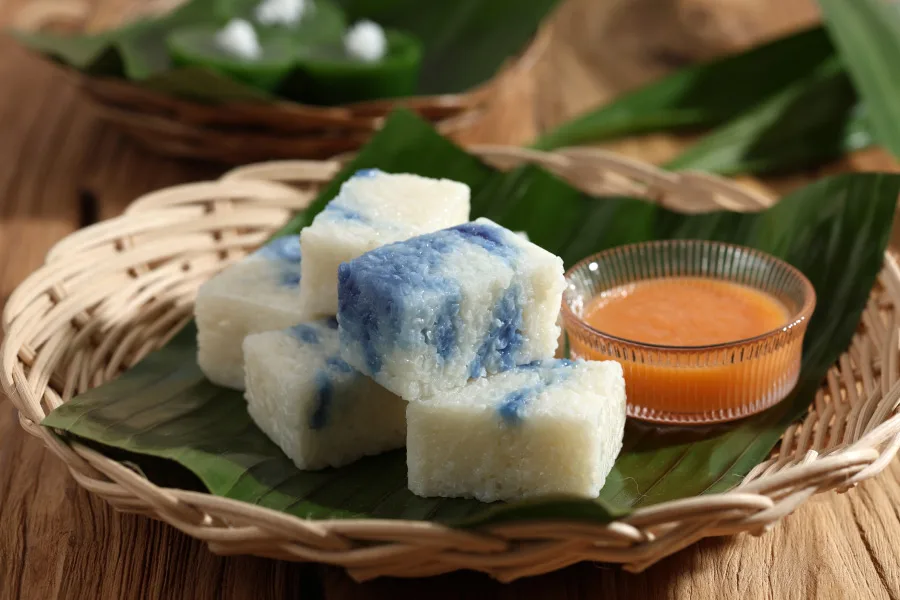
Glutinous rice is steamed with coconut milk, pressed into a slab and cut into pieces. Butterfly pea flowers give traditional versions their blue patches. It’s commonly served with kaya, a sweet coconut and egg jam. The rice has a firm, sticky bite and a mild flavour, so spread a little kaya on top before eating.
9. Kuih koci
Open the banana-leaf wrapper and you’ll find a chewy glutinous rice dumpling with a sweet filling, often grated coconut cooked with palm sugar. It’s a good choice if you like the coconut filling in ketayap but want a thicker, stickier wrapper.
10. Bingka ubi (bengkang ubi)
This baked cassava cake is made with grated cassava and coconut milk. Look for a browned top and a moist, dense centre. The corner pieces usually give you more of the caramelised edge.
11. Kuih keria
A fried sweet potato ring with a sugar coating, kuih keria is soft inside with a glaze that can crack slightly when you bite into it. Both white-sugar and palm-sugar coatings are used. Melaka is especially associated with the darker, caramel-scented kuih keria gula Melaka.
12. Akok
This rich, baked kuih from Kelantan is made with eggs, coconut milk and palm sugar. It has a soft, custardy bite and a wrinkled surface in many versions. If you spot oval and flower-shaped pieces at the same stall, both can be akok.
Five sweet street snacks to eat fresh
13. Apam balik
A folded griddle pancake typically filled with crushed peanuts and sugar. Sweet corn is a common addition. Some sellers make a thin, crisp version that snaps at the edges. The thicker version is spongier and holds more filling. If you see both on the menu, ask for nipis (thin) or tebal (thick).
14. Apom manis
In Penang, look for thin, lightly sweet apom with lacy edges and a soft middle. Some hawkers cook them in small clay pots. It’s the sort of snack worth eating while you’re still standing by the stall, before the edges soften. For places to try it alongside cendol and ais kacang, see Hungry.my’s Penang street food guide.
15. Putu piring
Steamed rice flour forms a soft, saucer-shaped cake around a centre of palm sugar. Grated coconut is served with it. A warm piece will crumble a little as you pick it up, then come together with the melting sugar in the middle.
16. Putu mayam
These fine rice-flour strands are steamed into small nests and served with freshly grated coconut and sugar. You can tear off a little, pinch it together with the coconut and add as much sugar as you like. You’ll also find it among the market and kopitiam staples in Hungry.my’s Malaysian breakfast guide.
17. Pisang goreng
A banana fritter is one of the simplest orders at a roadside snack stall. Straight from the fryer, the batter is crisp and the ripe banana inside is soft. Look for a vendor frying in batches if you want to eat it on the spot.
Eight Malaysian desserts to eat with a spoon or share
18. Cendol (chendol)
Cendol combines shaved ice, coconut milk, palm sugar syrup and short green jelly strands, usually scented with pandan. Red beans are a familiar addition in Penang. Scoop from the bottom to bring the syrup and coconut milk up through the ice. The result should taste creamy and caramel-like, with soft jelly in each spoonful.
19. Ais kacang (ABC)
ABC stands for air batu campur. A typical bowl starts with a mound of shaved ice over toppings such as red beans, sweet corn, grass jelly and palm seeds. Coloured syrup and evaporated milk are common, and some stalls add a scoop of ice cream. Cendol has a distinct coconut milk and palm sugar base. ABC is a mix of syrups and toppings, with more variation from stall to stall.
20. Bubur cha cha
This sweet coconut milk dessert commonly contains cubes of sweet potato and yam. Some cooks add chewy tapioca pieces or sago. It can be served warm or chilled. Each spoonful gives you a bit of the coconut broth and a different texture from whatever’s in the bowl.
21. Pengat pisang
Bananas are gently cooked in sweetened coconut milk for this spoon dessert. Palm sugar and pandan are common additions. Families make other kinds of pengat with ingredients such as sweet potato or durian, so the word after pengatusually helps you identify what’s in the pot.
22. Sago gula Melaka
Little translucent sago pearls are served with coconut milk and dark palm sugar syrup. The pearls are mild, so you can taste the difference between the rich coconut milk and the darker, almost toffee-like syrup. If the syrup comes on the side, add a little first and adjust as you go.
23. Tau fu fah (tau fu fa)
Soft, barely set soybean curd is ladled into a bowl and served with syrup. It can be warm or chilled, and the syrup might be plain, ginger-scented or made with brown sugar. The curd should be delicate enough to break apart under the spoon. You’ll often see it alongside fresh soy milk at market or roadside stalls.
24. Dodol
This dense, sticky confection is traditionally made by stirring coconut milk, glutinous rice flour and sugar as the mixture thickens. The result is chewy, with a deep caramel flavour. Buy a few small pieces if you’re curious. A little goes a long way, especially after a meal.
25. Kek lapis Sarawak
Fine layers, sometimes arranged into colourful geometric patterns, give Sarawak’s signature layer cake its distinctive look. It’s sliced to reveal the design and makes a good sweet to share with coffee or tea. If you want to see the pattern before buying a whole cake, look for shops offering slices or sample pieces.
Where to find traditional kuih and desserts in Malaysia
| Place | What to look for | Where to start |
|---|---|---|
| Penang | Nyonya kuih, apom manis, cendol and ais kacang | Morning markets for kuih, then hawker centres and specialist stalls for shaved ice. See the Penang street food guide. |
| Melaka | Kuih keria gula Melaka and putu piring | Look around Limbongan for keria and Tengkera for putu piring. |
| Kuala Lumpur and the Klang Valley | Seri muka, talam, ketayap and apam balik | Start at morning markets and dedicated kuih shops for an assortment. Try a pasar malam for apam balik. |
| Kelantan | Akok | Look for it at kuih stalls and markets. |
| Sabah | Kuih pinjaram, a fried cake with a fluted edge | Look at local markets and kuih stalls. You may also see it written penjaram. |
| Sarawak | Kek lapis Sarawak | Try dedicated cake shops, markets and food festivals. |
Morning markets are a good first stop if you want to see a full assortment of steamed kuih. Pasar malam are useful for pancakes and fritters cooked to order. During Ramadan, bazaars are another place to see several kuih vendors in one visit. At a mixed stall, ask “Kuih apa ni?” (what kuih is this?) or “Inti apa?” (what’s the filling?). It’s often the easiest way to learn the name the maker uses.
Frequently asked questions
What is the most famous Malaysian dessert?
Cendol is one of Malaysia’s best-known desserts. If you’re looking for a classic kuih to try first, start with onde-onde or seri muka.
What is the difference between seri muka and kuih talam?
Seri muka has a base of whole glutinous rice grains under pandan custard. Classic pandan kuih talam has a smooth green layer underneath a white coconut milk layer. At a stall, look at the base first.
Is Malaysian kuih always sweet?
Kuih can be sweet or savoury. Onde-onde and kuih lapis are sweet examples. Karipap and prawn fritters such as cucur udang are savoury and may be sold at the same stall.
What is the difference between putu piring and putu mayam?
Putu piring is a steamed rice flour cake with a palm sugar centre. Putu mayam comes as bundles of thin rice flour strands, with the grated coconut and sugar served alongside.
What are the green strands in cendol?
They’re short, soft strands made from a cooked flour or starch mixture, commonly flavoured and coloured with pandan. The exact flour or starch varies with the recipe.
What kuih should I buy for a group?
Ask for a mixed box with something chewy, something creamy and something with a filling. Kuih lapis, seri muka, ang ku kuih and onde-onde make a good starting combination. Add apam balik if you’re eating immediately and want something crisp.
The quickest way to get to know kuih is to buy a mixed box from one stall, then try the same names somewhere else. One maker’s seri muka might have a thicker custard, while another’s has saltier rice. Those little differences are worth paying attention to, especially when you find a piece you want to go back for.