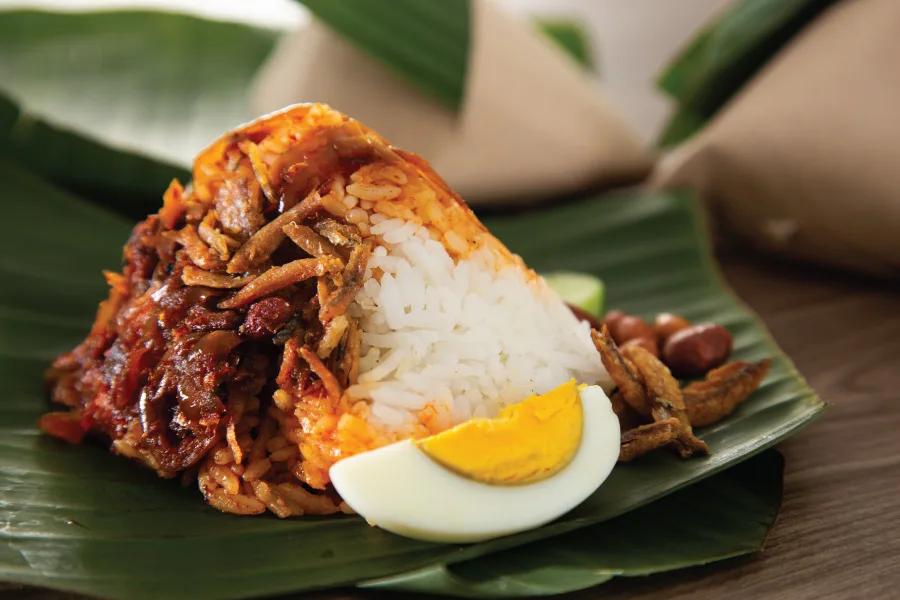
Few ingredients are as distinctive in Malaysian cooking as belacan. Recognisable by its pungent aroma and concentrated savoury flavour, this fermented shrimp paste is an essential ingredient in many traditional Malaysian dishes.
Although its strong smell can be surprising to those unfamiliar with it, belacan adds remarkable depth to food when used in small quantities. It is the ingredient behind the distinctive flavour of sambal belacan and an important component in many laksa, curries, stir-fried vegetables and traditional spice pastes.
From Malay home cooking to Nyonya cuisine, belacan has become deeply embedded in Malaysia’s culinary identity.
But what exactly is belacan, how is it made, and why is it so important in Malaysian cooking?

Quick Answer: What Is Belacan?
Belacan is a traditional Malaysian fermented shrimp paste made primarily from small shrimp or krill and salt. The mixture is fermented, dried and typically compressed into solid blocks.
It has a strong, pungent aroma and a concentrated salty, savoury flavour rich in umami.
Belacan is commonly toasted, roasted or fried before being incorporated into sambal, spice pastes, vegetable dishes and other Malaysian foods.
Although similar fermented shrimp pastes exist throughout Southeast Asia, belacan is particularly associated with Malaysian and Bruneian cooking.
What Is Belacan Made Of?
Traditional belacan is made using two primary ingredients:
- Small shrimp or krill, commonly known locally as udang geragau
- Salt
Despite its relatively simple ingredients, the fermentation and drying processes transform the mixture into a complex seasoning with a distinctive aroma and flavour.
The colour of belacan can range from pinkish brown to dark brown or greyish brown, depending on the type of shrimp used, production methods and processing conditions.
Commercially produced belacan may contain additional ingredients, so it is worth checking the packaging if you are looking for a traditional preparation.
The Origins and History of Belacan
The precise origins of belacan are difficult to trace to a single location or period.
Fermented seafood products have long been part of the culinary traditions of coastal communities across Southeast Asia, where salting, drying and fermentation provided practical methods of preserving seafood before modern refrigeration.
Small shrimp that were abundant during certain seasons could be processed into a concentrated paste that lasted considerably longer than fresh seafood.
Over generations, these preservation techniques developed into culinary traditions of their own.
In Malaysia, belacan became particularly important in Malay and Nyonya cooking, where it is used alongside chillies, herbs, spices and other aromatics.
Similar fermented shrimp pastes can be found in Indonesia, Thailand, the Philippines, Vietnam and Myanmar, reflecting the shared maritime and culinary heritage of the region.
How Is Belacan Made?
Traditional belacan production involves several stages, although methods vary between producers and regions.
1. Preparing the Shrimp
Small shrimp are collected, cleaned and sorted before being processed.
Coastal communities traditionally relied on locally available shrimp, making belacan production closely connected to fishing seasons and coastal environments.
2. Salting
The shrimp are mixed with salt.
Salt helps preserve the seafood, control microbial activity and create conditions suitable for fermentation.
3. Drying
The salted shrimp are partially dried, traditionally under the sun, to reduce their moisture content.
4. Grinding and Fermentation
The mixture is pounded or ground into a paste and allowed to ferment.
Depending on the traditional production method, the paste may undergo repeated cycles of drying, pounding and fermentation.
During fermentation, proteins are broken down into smaller compounds, contributing to the development of belacan’s characteristic aroma and savoury flavour.
5. Shaping and Further Drying
The fermented paste is commonly compressed into blocks or cakes and dried further.
This produces the familiar solid form of belacan sold in markets, grocery shops and supermarkets throughout Malaysia.
What Does Belacan Taste Like?
Belacan has a highly concentrated flavour that is difficult to compare directly with most other ingredients.
Its flavour profile is generally:
- Salty
- Intensely savoury
- Rich in umami
- Fermented
- Slightly briny
- Seafood-like
When toasted or roasted, belacan can develop a deeper, more rounded aroma with slightly smoky and nutty characteristics.
Despite its strong individual flavour, belacan is rarely intended to dominate a dish. Instead, it enhances the other ingredients around it.
A small amount added to chillies, shallots or garlic can create a depth of flavour that would otherwise be difficult to achieve.
Why Does Belacan Smell So Strong?
The distinctive smell of belacan comes largely from the fermentation of shrimp.
During fermentation, proteins and other compounds in the seafood break down, producing various aroma compounds that contribute to its pungent character.
Heating belacan can temporarily intensify its smell as these compounds are released.
For people unfamiliar with fermented seafood products, the aroma may initially seem overwhelming. However, once incorporated into a dish, belacan generally contributes a much more balanced and rounded savoury flavour.
Like fish sauce, aged cheese and other fermented foods, its aroma when concentrated can be considerably stronger than its flavour in a finished dish.
Why Is Belacan Rich in Umami?
Umami is often described as the fifth basic taste, alongside sweetness, sourness, saltiness and bitterness.
It is the savoury quality commonly associated with ingredients such as mushrooms, aged cheese, soy sauce, fish sauce and fermented seafood.
During belacan’s fermentation process, proteins are broken down into amino acids, including glutamate, which contributes to its umami-rich flavour.
This explains why even a small amount of belacan can make a dish taste richer and more complex.
Rather than simply adding a shrimp flavour, belacan helps bring together and deepen the flavours of other ingredients.
Why Is Belacan Toasted Before Cooking?
Many Malaysian recipes call for belacan to be toasted or roasted before use.
This can be done in a dry pan, over a flame or in an oven.
Toasting helps develop its aroma and introduces roasted characteristics that work particularly well in sambal and spice pastes.
It can also mellow some of the sharper raw fermented notes.
Toasted belacan is commonly used when preparing sambal belacan, while other recipes incorporate belacan directly into spice pastes that are subsequently fried.
Not every recipe requires belacan to be toasted separately. The preparation method depends on how it will be used.
What Is Sambal Belacan?
Perhaps the best-known use of belacan in Malaysia is sambal belacan.
This traditional condiment typically combines fresh chillies with toasted belacan and lime or calamansi juice.
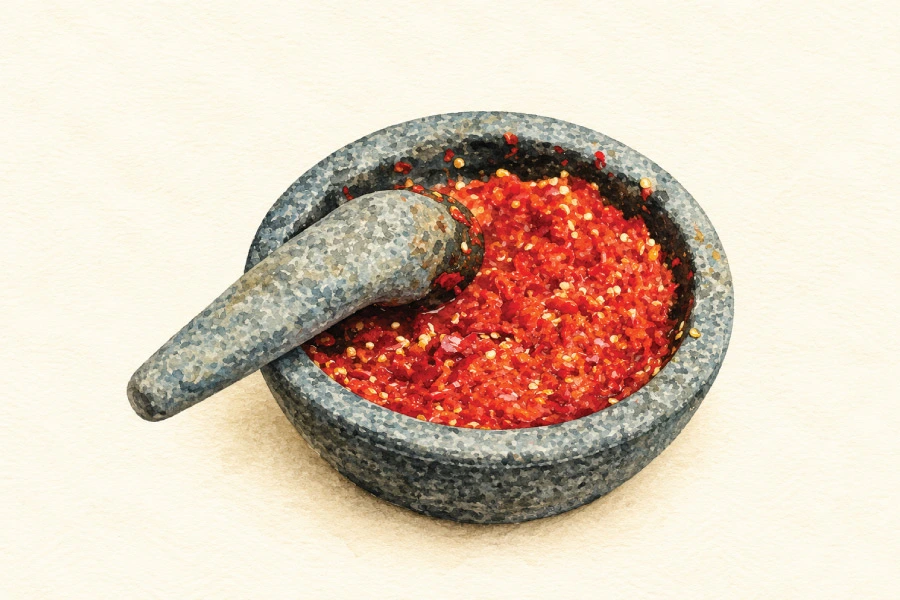
The ingredients are traditionally pounded together using a mortar and pestle, producing a condiment that is spicy, salty, sour and intensely savoury.
Sambal belacan is commonly eaten with rice, fried fish, grilled seafood, vegetables and traditional home-cooked meals.
However, sambal and belacan are not the same thing.
Belacan is an ingredient, while sambal is a broader family of chilli-based condiments and preparations. Sambal belacan is simply one of the many varieties of sambal found in Malaysia.
Read more: What Is Sambal? A Guide to Malaysia’s Essential Chilli Condiment
Popular Malaysian Dishes That Use Belacan
Belacan appears in numerous Malaysian dishes, sometimes as a defining ingredient and sometimes as a subtle background seasoning.
Sambal Belacan
One of the most direct expressions of belacan’s flavour, combining fermented shrimp paste with chillies and citrus.
Kangkung Belacan
Kangkung, also known as water spinach, is stir-fried with belacan, chillies and garlic.
It is one of the most recognisable vegetable dishes featuring belacan and can be found in restaurants, seafood eateries and homes throughout Malaysia.
Sambal Udang
Prawns are cooked in a rich chilli-based sambal that may contain belacan to enhance the natural sweetness and savouriness of the seafood.
Sambal Sotong
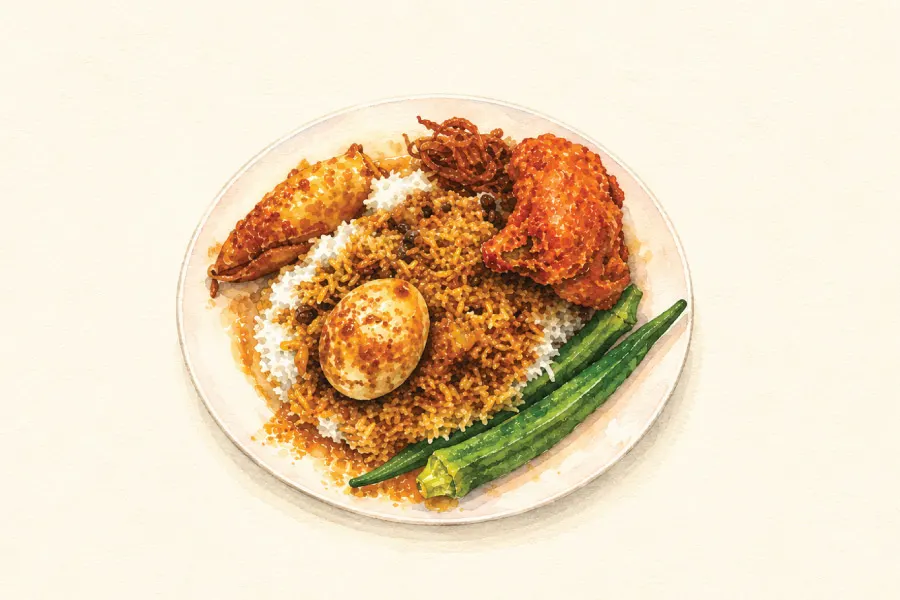
Squid cooked in sambal is a popular accompaniment to rice dishes, including Nasi Lemak.
Belacan may be incorporated into the sambal to provide additional depth.
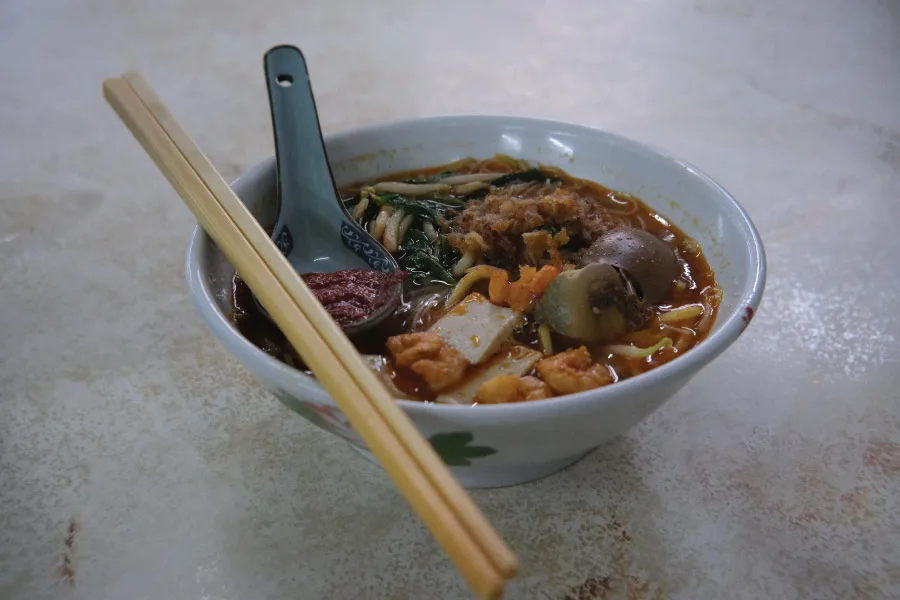
Assam Laksa
In many traditional Assam Laksa recipes, belacan forms part of the spice paste used to flavour the fish-based broth.
Its savouriness complements the sourness of tamarind and the fragrance of herbs such as bunga kantan and daun kesum.
Nasi Goreng Belacan
This variation of fried rice uses belacan as a prominent seasoning, often alongside chillies, garlic, vegetables and seafood.
Nyonya Dishes
Belacan is particularly important in Peranakan or Nyonya cuisine, where it frequently appears in rempah, the aromatic spice pastes that form the foundation of many dishes.
Its concentrated savouriness works naturally with the herbs, spices, sour ingredients and chillies characteristic of Nyonya cooking.
Belacan in Malaysian Food Culture
Belacan is more than simply a seasoning.
Its development reflects the relationship between coastal communities, local ingredients and traditional food preservation methods.
For generations, fermented seafood products allowed communities to preserve seasonal catches while creating ingredients that could transform everyday meals.
Even a relatively simple meal of rice, vegetables and fried fish could become considerably more flavourful with a small serving of sambal belacan.
In Malaysian households, the smell of belacan being toasted or fried is often associated with the preparation of a home-cooked meal.
Its continued use also demonstrates how traditional preservation techniques remain relevant long after their original practical necessity has diminished.
Today, belacan is used not because fresh seafood is unavailable, but because fermentation creates flavours that fresh ingredients cannot easily replicate.
Belacan vs Other Southeast Asian Shrimp Pastes
Fermented shrimp paste is not unique to Malaysia. Similar ingredients can be found throughout Southeast Asia, although their production methods, textures, flavours and culinary uses vary.
| Shrimp Paste | Country or Region | Typical Characteristics |
|---|---|---|
| Belacan | Malaysia, Brunei | Firm, concentrated fermented shrimp paste, commonly sold in blocks |
| Terasi | Indonesia | Fermented shrimp or fish paste, often sold in solid blocks |
| Kapi | Thailand | Typically a softer fermented shrimp paste used in curries and chilli dips |
| Bagoong Alamang | Philippines | Fermented small shrimp, commonly sold as a moist paste |
| Mắm Tôm | Vietnam | Pungent fermented shrimp paste, generally softer or more liquid |
| Ngapi | Myanmar | A broader category of fermented fish or shrimp pastes |
These ingredients share similar principles of salting and fermentation but have developed distinctive identities within their respective culinary traditions.
They can sometimes substitute for one another in recipes, although differences in saltiness, moisture and flavour may affect the finished dish.
Belacan vs Cincalok: What Is the Difference?
Belacan and cincalok are both traditional fermented shrimp products found in Malaysia, but they are quite different.
Belacan is typically a concentrated, relatively dry shrimp paste compressed into blocks. It is primarily used as a seasoning or cooking ingredient.
Cincalok is a moist fermented shrimp preparation commonly made with small shrimp, salt and cooked rice. It retains much more of the shrimp’s original texture and is often served as a condiment with sliced shallots, chillies and lime juice.
While belacan contributes concentrated umami to dishes, cincalok has a more pronounced briny, fermented character and is frequently eaten directly as an accompaniment.
Cincalok is particularly associated with Melaka’s food heritage.
Belacan vs Fish Sauce
Both belacan and fish sauce are fermented seafood seasonings used to add savoury depth to food.
However, they differ in their ingredients, texture and application.
Belacan is typically made from small shrimp and sold as a solid or concentrated paste.
Fish sauce is a liquid seasoning produced through the fermentation of fish, commonly anchovies, with salt.
Although both contribute umami and saltiness, they have different aromas and flavour profiles and are not always interchangeable in recipes.
Belacan vs Sambal: What Is the Difference?
The two terms are sometimes confused, particularly by people unfamiliar with Malaysian cooking.
| Belacan | Sambal | |
|---|---|---|
| What it is | Fermented shrimp paste | Chilli-based condiment or preparation |
| Main ingredient | Small shrimp and salt | Chillies |
| Flavour | Salty, fermented and savoury | Spicy, with varying sweet, sour and savoury notes |
| Typical use | Seasoning or cooking ingredient | Condiment or cooking base |
| Contains seafood? | Yes | Depends on the recipe |
Belacan can be used to make sambal, but not every sambal contains belacan.
Is Belacan Spicy?
No. Traditional belacan does not contain chillies and is not inherently spicy.
However, it is frequently combined with chillies in Malaysian cooking, which explains why many people associate its flavour with spicy dishes.
Sambal belacan, for example, gets its heat from the chillies rather than the belacan itself.
Is Belacan Halal?
Traditional belacan made solely from shrimp and salt is generally considered halal.
However, additional ingredients, processing methods and manufacturing conditions can vary between commercial products.
Consumers requiring formal halal assurance should check the product’s ingredients and certification.
Is Belacan Vegetarian or Vegan?
No. Traditional belacan is made from shrimp or krill and is therefore neither vegetarian nor vegan.
This is particularly important when ordering Malaysian vegetable dishes, as preparations such as kangkung belacan may appear vegetarian but contain fermented seafood.
People with crustacean shellfish allergies should also avoid belacan and check whether it has been used in sambal, curry pastes or other dishes.
What Can You Substitute for Belacan?
If belacan is unavailable, several ingredients may provide some of its savoury characteristics.
Possible substitutes include:
- Indonesian terasi
- Thai shrimp paste (kapi)
- Other fermented shrimp pastes
- Fish sauce, in certain recipes
- Miso paste, as a plant-based alternative
Other Southeast Asian fermented shrimp pastes generally provide the closest flavour.
Fish sauce and miso can contribute savouriness, but neither fully replicates the distinctive aroma and concentrated flavour of belacan.
Adjust the quantity according to the substitute’s saltiness and concentration.
Where Can You Buy Belacan?
In Malaysia, belacan is widely available at:
- Traditional wet markets
- Grocery shops
- Supermarkets
- Shops specialising in dried seafood
- Local food product stores
- Online marketplaces
Outside Malaysia, belacan can often be found in Asian supermarkets or stores specialising in Southeast Asian ingredients.
It is commonly sold in compressed blocks, although powdered, granulated and ready-to-use versions are also available.
How Do You Store Belacan?
Belacan is a preserved ingredient, but its shelf life depends on its moisture content, production method and packaging.
Commercially packaged belacan should be stored according to the manufacturer’s instructions.
Once opened, keep it tightly sealed to prevent moisture exposure and its strong aroma from spreading to other foods.
Refrigeration may be recommended depending on the product.
Frequently Asked Questions About Belacan
What is belacan called in English?
Belacan is commonly referred to as Malaysian shrimp paste or fermented shrimp paste.
What is belacan made from?
Traditional belacan is made primarily from small shrimp or krill and salt, which are processed through fermentation and drying.
Is belacan the same as shrimp paste?
Belacan is a type of fermented shrimp paste. However, not all shrimp pastes are belacan, as different Southeast Asian countries have their own traditional varieties.
Why does belacan smell so bad?
Belacan’s pungent smell comes from aroma compounds produced during the fermentation of shrimp. Although the concentrated aroma can be strong, it adds savoury depth when used in cooking.
Does belacan need to be cooked?
Belacan is commonly toasted, roasted or cooked as part of a dish. Follow the preparation instructions for the particular product and recipe, as not all belacan products are intended to be eaten without cooking.
Is belacan the same as sambal belacan?
No. Belacan is fermented shrimp paste, while sambal belacan is a condiment made by combining belacan with chillies and other ingredients.
Is belacan spicy?
No. Traditional belacan is not spicy. The heat in dishes containing belacan generally comes from added chillies.
Can vegetarians eat belacan?
No. Belacan contains shrimp and is unsuitable for vegetarian and vegan diets.
Can people with shellfish allergies eat belacan?
People with crustacean shellfish allergies should avoid belacan because it is made from shrimp or krill. Fermentation and cooking do not reliably eliminate the allergens.
What dishes use belacan?
Belacan is commonly used in sambal belacan, kangkung belacan, Assam Laksa, sambal udang, sambal sotong, Nyonya spice pastes and various Malaysian vegetable and seafood dishes.
Belacan may not be the most visually appealing or delicately scented ingredient in Malaysian cooking, but few ingredients contribute quite as much character.
Made from humble ingredients and shaped by generations of fermentation and preservation traditions, belacan has become an indispensable part of Malaysia’s culinary landscape.
Its ability to transform chillies, vegetables, seafood and spice pastes demonstrates how a small amount of a single ingredient can profoundly influence the flavour of an entire dish.
For anyone looking to understand Malaysian cuisine beyond its famous dishes, belacan is an excellent place to start.
Because sometimes, the secret behind the food we love is not the most visible ingredient on the plate, but the one quietly bringing everything together.