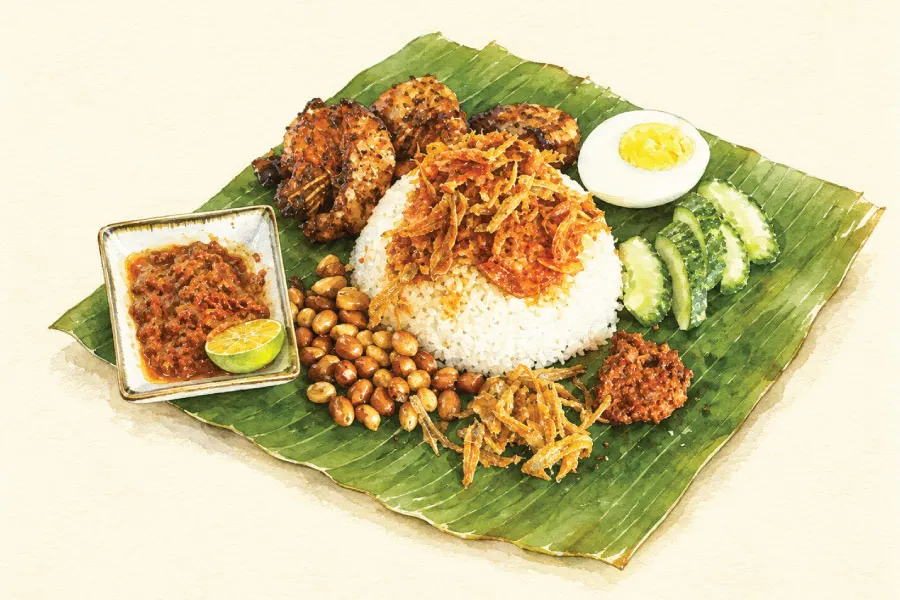
Spicy, aromatic and endlessly adaptable, sambal is one of the most important condiments in Malaysian cooking.
You might find it beside a plate of Nasi Lemak, spooned over rice, served with fried chicken, cooked with prawns or squid, or used as the flavour base of an entire dish. Some sambals are fiery and raw, while others are slowly cooked until sweet, dark and deeply savoury.
There isn’t just one recipe for sambal.
Instead, the word describes a broad family of chilli-based condiments and preparations found across Malaysia, Indonesia, Singapore and other parts of Southeast Asia.
So what exactly is sambal, what is it made from, and why are there so many different kinds?
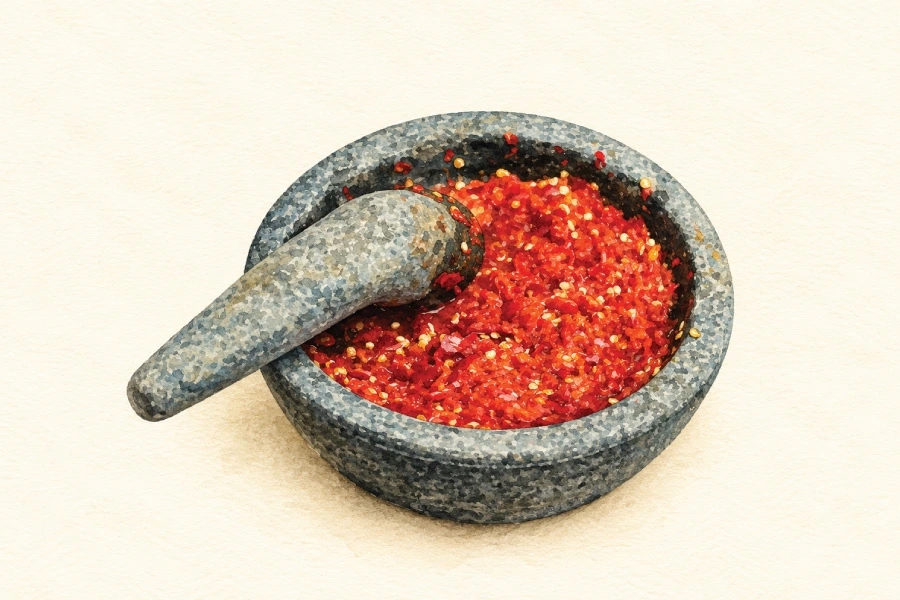
Quick Answer: What Is Sambal?
Sambal is a Southeast Asian chilli-based condiment or preparation typically made from fresh or dried chillies combined with ingredients such as shallots, garlic, belacan, lime, tamarind, sugar or salt.
Recipes vary enormously.
Sambal can be raw or cooked, smooth or coarse, sweet or savoury, mildly spicy or intensely hot. It may be served as a condiment or used as a cooking ingredient for meat, seafood, vegetables and other dishes.
In Malaysia, sambal is an essential part of everyday food culture and appears across Malay, Nyonya and many other local culinary traditions.
Is Sambal Just Chilli Sauce?
Not quite.
Calling sambal “chilli sauce” is a convenient way of explaining it, but it doesn’t fully capture what sambal is.
Commercial chilli sauce is generally a relatively uniform bottled condiment. Sambal encompasses a much broader range of preparations.
Depending on the recipe, sambal can contain chillies alongside:
- Shallots
- Garlic
- Belacan
- Tamarind
- Lime or calamansi
- Sugar
- Salt
- Tomatoes
- Lemongrass
- Other herbs and aromatics
Some sambals are pounded and eaten fresh. Others are fried or slowly cooked until their ingredients become concentrated and caramelised.
Sambal is therefore better understood as a family of chilli-based condiments and dishes rather than one specific sauce.
What Is Sambal Made Of?
There is no universal sambal recipe, but chilli is usually at its heart.
Chillies
Fresh red chillies, dried chillies and small bird’s eye chillies — commonly known as cili padi in Malaysia — may all be used.
The choice of chilli influences not only the heat but also the colour, aroma and flavour of the finished sambal.
Shallots and Garlic
Shallots and garlic form the aromatic foundation of many cooked sambals.
When fried slowly, they contribute sweetness and depth that balance the heat of the chillies.
Belacan
Belacan, a fermented shrimp paste widely used in Malaysian cooking, is an important ingredient in many sambals.
It contributes saltiness, umami and a distinctive fermented seafood aroma.
However, not every sambal contains belacan.
Acidity
Tamarind, lime, calamansi or other sour ingredients may be added to provide acidity.
This helps balance the richness, sweetness and chilli heat.
Sugar
Sugar is frequently used to round out the flavour of sambal rather than simply make it sweet.
Some styles, including many sambals served with Nasi Lemak, can have a noticeably sweet character.
Salt
Salt helps bring the various chilli, aromatic, sour and sweet elements together.
What Does Sambal Taste Like?
That depends entirely on the sambal.
A fresh sambal might taste bright, sharp and intensely spicy. A cooked sambal can be sweeter, richer and more mellow. Adding belacan introduces deep savoury and fermented notes, while tamarind or lime contributes acidity.
Good sambal is often about balance rather than heat alone.
Depending on the recipe, you may experience combinations of:
- Spicy
- Sweet
- Salty
- Sour
- Savoury
- Smoky
- Fermented
This complexity is one reason sambal works with so many different foods.
Is Sambal Always Spicy?
Sambal is chilli-based, so some heat is generally expected. However, not every sambal is extremely spicy.
The heat depends on the chillies used, their quantity and the other ingredients in the recipe.
A sambal made predominantly with bird’s eye chillies can be extremely hot, while a slowly cooked sambal containing larger chillies, onions and sugar may be comparatively mild and sweet.
This means asking whether sambal is spicy is a little like asking whether curry is spicy: it depends on the particular recipe.
Popular Types of Sambal in Malaysia
There are countless sambal recipes across Southeast Asia, and names, ingredients and preparations can overlap between regions.
Several varieties are particularly useful to know when exploring Malaysian food.
Sambal Belacan
Sambal belacan is one of Malaysia’s best-known sambals.
It typically combines chillies with toasted or roasted belacan and may include lime or calamansi juice.
Unlike long-cooked sambals, sambal belacan is commonly pounded together and served as a condiment.
Its flavour can be intensely spicy, salty, sour and savoury.
It pairs particularly well with rice, vegetables, fish and other home-cooked dishes.
Sambal Nasi Lemak
The sambal accompanying Nasi Lemak is usually a cooked sambal.
Recipes vary considerably, but dried chillies, onions or shallots and other aromatics are commonly cooked until they develop a rich flavour. Tamarind and sugar may be used to create the familiar balance of heat, sweetness and acidity.
Some versions are fiery, while others are distinctly sweet.
For many Nasi Lemak lovers, the quality of the sambal can determine the quality of the entire meal.
Sambal Tumis
Tumis refers to frying or sautéing.
Sambal tumis is consequently a cooked sambal in which the chilli mixture is fried with aromatics until fragrant and concentrated.
It can be eaten as a condiment or developed further with other ingredients to create complete dishes.
Sambal Ikan Bilis
Sambal ikan bilis combines sambal with dried anchovies.
The anchovies contribute saltiness, crunch or savoury depth depending on how they are prepared.
It is commonly eaten with rice and can also appear as part of Nasi Lemak.
Sambal Sotong
Sambal sotong consists of squid cooked in sambal.
The natural sweetness of squid works particularly well with the spicy, savoury and sometimes sweet characteristics of cooked sambal.
It is a popular accompaniment to rice and is frequently offered alongside Nasi Lemak.
Sambal Udang
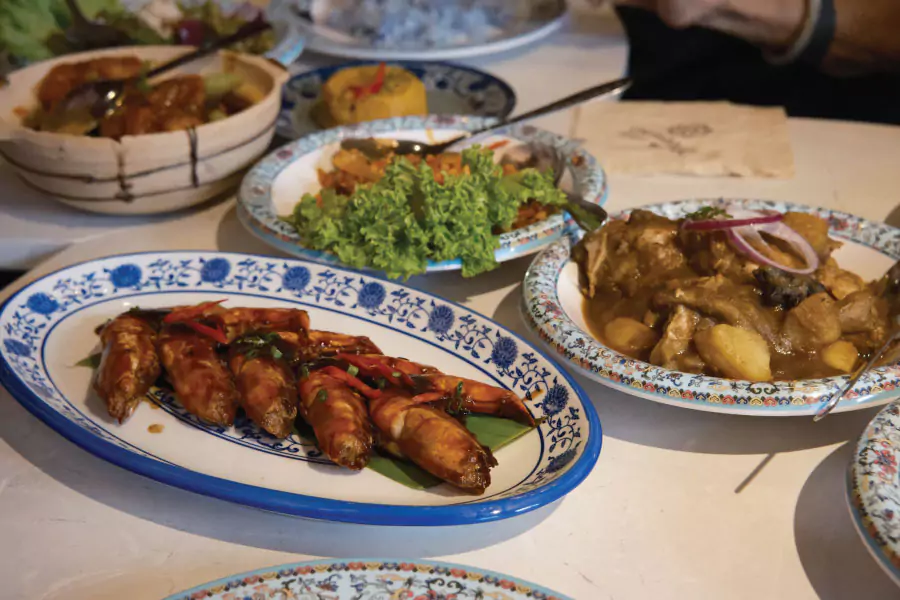
Prawns cooked in sambal create another popular seafood variation.
As with sambal sotong, the sweetness of the seafood contrasts naturally with chilli and aromatics.
Sambal Petai
Petai — sometimes called stink beans — has an unmistakably strong aroma and slightly bitter character.
Cooking it with sambal creates an assertive combination that is particularly popular among diners who enjoy the distinctive flavour of petai.
Prawns are sometimes added to make sambal udang petai.
Sambal Hijau
Unlike the familiar red sambals, sambal hijau — or green sambal — uses green chillies as a primary ingredient.
Different versions exist throughout Southeast Asia, with recipes varying considerably in heat, acidity and additional aromatics.
What Is Sambal Belacan?
Sambal belacan deserves particular attention because sambal and sambal belacan are not interchangeable terms.
Sambal is the broad category.
Sambal belacan is one particular type made with belacan, Malaysia’s fermented shrimp paste.
Traditionally, chillies and belacan are pounded together using a mortar and pestle. Lime or calamansi juice may then be added.
The result is a pungent condiment carrying the heat of chilli, the savouriness of fermented shrimp and the freshness of citrus.
Once Hungry.my’s dedicated Belacan explainer is published, it should sit naturally alongside this article as part of the Malaysian ingredients cluster.
Raw Sambal vs Cooked Sambal
One useful way to understand sambal is to divide it loosely between fresh and cooked preparations.
Fresh or Raw Sambal
Fresh sambals generally retain the brighter characteristics of their ingredients.
They may contain freshly pounded chillies, belacan, citrus and other ingredients and are often served in relatively small quantities as a condiment.
Cooked Sambal
Cooked sambals develop a different character.
Frying chillies, shallots and aromatics allows moisture to evaporate and flavours to concentrate. Onions become sweeter, chilli flavours deepen, and oil helps carry the aromatics throughout the mixture.
Some sambals are cooked for a considerable amount of time until they become dark, rich and almost jam-like.
Neither style is inherently better — they simply serve different purposes.
How Is Sambal Traditionally Made?
Traditionally, many sambals are prepared using a mortar and pestle.
The ingredients are pounded rather than simply chopped, breaking them down while retaining some texture.
Modern cooks may use a blender or food processor, particularly when preparing larger quantities.
Cooked sambals generally involve blending or pounding the ingredients before frying the mixture in oil.
One important stage in many recipes is cooking the chilli mixture sufficiently for its raw flavour to disappear and the oil to begin separating from the paste.
In Malaysian cooking, this stage is often described as pecah minyak, literally referring to the oil separating from the cooked spice mixture.
What Is Pecah Minyak?
If you explore Malaysian recipes, particularly sambal and curry recipes, you will frequently encounter the term pecah minyak.
It describes the stage when a spice paste has been cooked sufficiently for the oil to separate visibly from the mixture.
This is more than a visual cue.
Proper cooking allows moisture to evaporate, raw flavours to mellow and the aromatics and spices to develop greater depth.
Stopping too early can leave a sambal tasting raw or harsh.
Understanding pecah minyak therefore helps explain why a good cooked sambal often requires patience rather than simply blending chillies and heating them briefly.
How Do Malaysians Eat Sambal?
There are almost endless possibilities.
Sambal can be:
- Served beside rice
- Eaten with Nasi Lemak
- Paired with fried chicken
- Served with fried or grilled fish
- Eaten with fresh vegetables or ulam
- Added to noodles
- Cooked with prawns
- Cooked with squid
- Cooked with eggs
- Combined with ikan bilis
- Cooked with petai
- Used as part of other rice dishes
At home, even a simple meal of rice, vegetables, egg or fried fish can become considerably more flavourful with a small amount of sambal.
Sambal and Nasi Lemak
Perhaps the internationally best-known pairing is Nasi Lemak and sambal.
Nasi Lemak combines fragrant coconut rice with traditional accompaniments such as ikan bilis, peanuts, cucumber and egg.
Sambal provides the chilli, sweetness, acidity and savouriness that connects these components.
Different Nasi Lemak vendors often develop their own sambal recipes, which can become an important part of their identity.
Some customers prefer intensely spicy sambal. Others favour a darker and sweeter version.
This is why two plates of Nasi Lemak containing similar ingredients can still taste remarkably different.
Sambal in Malaysian Food Culture
Sambal illustrates something important about Malaysian cuisine: there is rarely just one way to prepare a familiar food.
Recipes can differ between regions, communities, restaurants and households.
A family’s sambal recipe may be passed between generations and adjusted according to personal preference. A hawker may develop a particular sambal that becomes inseparable from the dish they sell.
Different Malaysian culinary traditions also use chilli pastes and sambals in different ways.
As a result, sambal isn’t merely something spicy placed beside food. It is part of the flavour vocabulary of Malaysian cooking.
Malaysian Sambal vs Indonesian Sambal
Sambal is not exclusive to Malaysia.
Indonesia has an extraordinarily diverse sambal tradition, with numerous regional varieties using different chillies, tomatoes, shallots, shrimp paste, citrus and other ingredients.
Malaysia likewise has its own sambal traditions shaped by local ingredients and Malay, Nyonya and other culinary influences.
There is substantial overlap because food traditions across the Malay Archipelago developed through centuries of migration, trade and cultural exchange.
It is therefore more useful to think of sambal as a shared Southeast Asian culinary family with numerous regional expressions rather than trying to reduce it to a single national recipe.
Is Sambal Vegetarian?
Sometimes, but not always.
A sambal made only from chillies, aromatics, vegetables, oil and seasonings can be vegetarian or vegan.
However, many Malaysian sambals contain belacan, which is made from shrimp. Others may contain ikan bilis or other seafood ingredients.
If you follow a vegetarian or vegan diet, check the ingredients rather than assuming a chilli-based sambal contains no animal products.
Is Sambal the Same as Sriracha?
No.
Both contain chillies, but they are different condiments.
Sriracha generally refers to a smooth chilli sauce made with chillies, vinegar, garlic, sugar and salt.
Sambal encompasses a much wider family of preparations. It may be coarse or smooth, raw or cooked, and can contain belacan, shallots, tamarind, citrus and numerous other ingredients.
Their textures, preparation methods and culinary uses can therefore be very different.
Is Sambal the Same as Chilli Crisp?
No.
Chilli crisp is generally an oil-based condiment containing fried chilli and other crispy aromatics.
Some sambals use a substantial amount of oil, but sambal is not defined by crisp ingredients or chilli-infused oil.
Again, sambal describes a much broader category.
Frequently Asked Questions About Sambal
What is sambal?
Sambal is a broad family of Southeast Asian chilli-based condiments and preparations. It can contain chillies, shallots, garlic, belacan, tamarind, citrus, sugar and other ingredients depending on the recipe.
Is sambal Malaysian or Indonesian?
Sambal forms part of culinary traditions across Southeast Asia, particularly Malaysia and Indonesia. Numerous regional styles have developed across the region rather than there being one universal sambal recipe.
What is sambal belacan?
Sambal belacan is a type of sambal made using chillies and fermented shrimp paste known as belacan, often with lime or calamansi added for acidity.
Is sambal very spicy?
Some sambals are extremely spicy, while others are relatively mild or sweet. Heat depends largely on the type and amount of chilli used.
Does sambal contain shrimp?
Some sambals do. Sambal belacan contains fermented shrimp paste, while other recipes may contain dried anchovies or seafood. However, not every sambal contains seafood.
Is sambal vegan?
Not necessarily. Sambals containing belacan, ikan bilis or other seafood ingredients are not vegan. Plant-based sambals can be made without these ingredients.
What is the sambal served with Nasi Lemak?
Nasi Lemak is generally served with a cooked chilli sambal that may contain dried chillies, shallots or onions, tamarind, sugar and other seasonings. Recipes vary considerably between cooks.
What can you eat with sambal?
Sambal can accompany rice, Nasi Lemak, vegetables, eggs, fried chicken, fish and many other foods. It can also be cooked directly with seafood, meat or vegetables.
How should sambal be stored?
Storage depends on how the sambal was prepared and whether it is homemade or commercially produced. Fresh sambals generally have a shorter shelf life than thoroughly cooked or commercially packaged products. Follow the producer’s storage instructions for packaged sambal and keep homemade preparations appropriately refrigerated.
Trying to define sambal with a single recipe misses what makes it interesting.
At its simplest, sambal begins with chilli. From there, it can become something fresh and fiery, pungent with belacan, sweet and slowly caramelised, or rich enough to form the foundation of an entire dish.
That versatility has allowed sambal to become deeply embedded in Malaysian food.
It can transform a simple plate of rice, define the character of a Nasi Lemak, accompany vegetables at the family table or become the base for squid, prawns, ikan bilis and countless other dishes.
Understanding sambal therefore opens the door to understanding much more of Malaysian cooking — because once you start recognising the different sambals, you begin to see how chilli, aromatics, fermentation, sweetness and acidity are balanced throughout the cuisine.