Breakfast in Malaysia can be as simple as kaya toast and soft-boiled eggs, or as substantial as a plate of nasi lemak, roti canai with curry, or a steaming bowl of noodles.
There is no single definition of a Malaysian breakfast. The country’s morning food reflects its Malay, Chinese, Indian, Peranakan and Indigenous communities, alongside decades of regional migration and cultural exchange. What people eat also changes from one state—and sometimes one neighbourhood—to another.
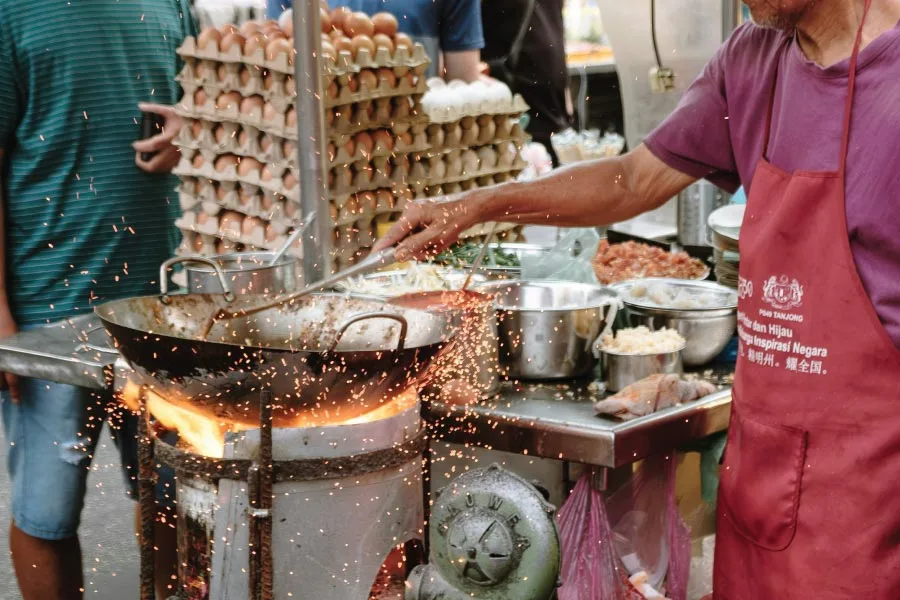
Walk into a traditional kopitiam and you may find toast, eggs, coffee and several noodle stalls operating under one roof. Visit a mamak restaurant and roti canai, thosai and nasi kandar may already be available early in the morning. At a wet market, roadside stall or neighbourhood hawker centre, breakfast could mean curry mee, chee cheong fun, nasi dagang or freshly steamed kuih.
This Malaysian breakfast guide introduces the country’s essential morning dishes, drinks and dining traditions, including what to order and where different breakfasts are commonly found.
What Do Malaysians Eat for Breakfast?
Malaysian breakfasts generally fall into several broad groups:
- Rice dishes such as nasi lemak, nasi dagang and nasi kerabu
- Indian flatbreads and rice-based dishes such as roti canai, thosai and idli
- Toast, eggs and coffee served at kopitiams
- Noodle dishes including curry mee, wantan mee, mee kolok and Sarawak laksa
- Dim sum and Chinese rice or noodle dishes
- Malay and Nyonya kuih
- Regional dishes associated with particular states and communities
Unlike in countries where breakfast foods are clearly separated from lunch or dinner, many Malaysian dishes can be eaten throughout the day. Nasi lemak may be a quick morning meal, a packed lunch or a late-night supper. Roti canai and noodle dishes are similarly flexible.
However, the morning remains the best time to experience many neighbourhood stalls. Some breakfast vendors begin before sunrise and close as soon as their food sells out.
1. Nasi Lemak
Nasi lemak is one of Malaysia’s most recognisable dishes and an essential introduction to the Malaysian breakfast table.
At its simplest, nasi lemak consists of rice cooked with coconut milk and pandan leaves, served with sambal, fried anchovies, roasted or fried peanuts, sliced cucumber and egg. The egg may be hard-boiled, fried or cooked as an omelette.
Traditional packets of nasi lemak are often wrapped in banana leaf and paper. These smaller portions are commonly sold at roadside stalls, markets, kopitiams and neighbourhood food counters in the morning.
More elaborate versions may include:
- Ayam goreng, or fried chicken
- Beef rendang
- Sambal sotong
- Sambal kerang
- Fried fish
- Spiced chicken or beef
- Paru, or fried beef lung
- Cockles, squid or prawns
The quality of nasi lemak depends heavily on the rice and sambal. Good nasi lemak rice should be fragrant and rich without becoming overly greasy, while the sambal should balance chilli heat, sweetness and savouriness.
Although nasi lemak is widely available throughout Malaysia, recipes and side dishes differ between vendors. It is also commonly associated with Malay food, but versions of the dish are prepared and sold by Malaysians from different cultural backgrounds.
2. Roti Canai
Roti canai is a flaky flatbread commonly found at Indian Muslim, or mamak, restaurants throughout Malaysia.
The dough is stretched, folded and cooked on a hot griddle until crisp on the outside while remaining soft and layered inside. A plain roti canai is usually served with dhal, curry and sometimes sambal.
Popular variations include:
- Roti telur – filled with egg
- Roti bawang – filled with onion
- Roti telur bawang – filled with egg and onion
- Roti planta – cooked with margarine and often slightly sweet
- Roti tisu – stretched thin, cooked until crisp and frequently shaped into a cone
- Roti bom – a smaller, thicker and sweeter version
- Murtabak – a heavier stuffed bread containing egg, onion and minced meat
Some diners tear the roti into pieces and dip it into the accompanying curry. Others request roti banjir, where the bread is flooded with curry and dhal before being served.
Roti canai is eaten at almost any time of day, but it remains one of Malaysia’s favourite choices for a quick and affordable breakfast.
3. Kaya Toast and Soft-Boiled Eggs
The classic kopitiam breakfast usually consists of kaya toast, two soft-boiled eggs and a cup of coffee or tea.
Kaya is a sweet coconut jam traditionally made with coconut milk, eggs and sugar. Some varieties are flavoured with pandan, giving the kaya a green colour and floral aroma. Others are caramelised longer and have a brown colour with a deeper, richer flavour.
Kaya toast is commonly prepared with:
- Thin slices of toasted white bread
- Kaya
- Butter or margarine
The toast may be served as crisp slices or as a softer steamed bread known as roti kukus.
The eggs are cooked until the whites remain delicate and the yolks are runny. They are usually cracked into a small bowl and seasoned with soy sauce and white pepper. Some people dip their toast into the eggs, while others eat the two separately.
This style of breakfast is closely associated with Malaysia’s traditional kopitiams, especially in towns with a long-established Hainanese coffee-shop culture.
4. Thosai
Thosai—also written as tosai or dosa—is a thin South Indian crepe made from a fermented batter of rice and lentils.
It is usually crisp around the edges, softer towards the centre and served with dhal, chutney and curry. Its light texture and gentle fermented flavour make it a popular alternative to the richer roti canai.
Common variations include:
- Thosai telur – with egg
- Thosai bawang – with onion
- Masala thosai – filled with spiced potato
- Ghee thosai – prepared with ghee
- Paper thosai – larger, thinner and crispier
- Rava thosai – made with semolina and usually more textured
Thosai is widely available at Indian restaurants and mamak eateries. The accompaniments vary between establishments, with some serving coconut chutney, tomato chutney or several types of curry.
5. Idli
Idli is a soft, steamed cake made from fermented rice and lentil batter. It has a mild flavour and light, fluffy texture.
Usually served with dhal, sambar and chutney, idli is a comforting breakfast that absorbs the flavours of its accompaniments. It is neither fried nor especially heavy, making it a popular choice for diners looking for a gentler start to the day.
Idli is most commonly found at South Indian restaurants, especially during breakfast hours. Availability may be more limited later in the day.
6. Nasi Dagang
Nasi dagang is a traditional East Coast dish strongly associated with Terengganu and Kelantan.
It typically combines richly flavoured rice with fish curry, pickled vegetables and other accompaniments. The rice may be prepared with coconut milk and a mixture of grains, although the exact recipe changes by region.
Terengganu-style nasi dagang commonly features fragrant white rice mixed with glutinous rice, while Kelantan versions may use a different grain combination and appearance. The dish is frequently accompanied by gulai ikan tongkol, a curry made with tuna or mackerel tuna.
For many people on Malaysia’s East Coast, nasi dagang is a familiar breakfast rather than a special-occasion dish. Dedicated vendors often begin serving it early and sell out before lunch.
7. Nasi Kerabu
Nasi kerabu is closely associated with Kelantan and the northern East Coast of Peninsular Malaysia.
Its most distinctive feature is its blue-tinted rice, traditionally coloured with butterfly pea flowers. The rice is accompanied by finely shredded herbs and vegetables, toasted coconut, salted egg, crackers, sambal and a choice of protein.
Possible additions include:
- Ayam percik
- Fried chicken
- Grilled fish
- Beef
- Solok lada, or stuffed chilli
- Fish crackers
The mixture of raw herbs, toasted ingredients, sauces and rice gives nasi kerabu a layered combination of fresh, smoky, salty, sweet and spicy flavours.
Although it is substantial enough for lunch, nasi kerabu is commonly sold from the morning in Kelantan and Terengganu.
8. Lontong
Lontong is particularly common in Johor and among Javanese-influenced communities in Malaysia.
The dish usually consists of compressed rice cakes served in a coconut milk-based vegetable gravy. Ingredients may include cabbage, long beans, carrots, tofu and tempeh. Sambal adds heat and depth to the otherwise creamy broth.
Some versions are served with boiled egg, begedil, fried chicken or other side dishes. A related breakfast, lontong kering, is served with less gravy and a greater assortment of accompaniments.
Lontong is filling but comforting, with contrasting textures from the rice cakes, vegetables, tofu and condiments.
9. Curry Mee
Curry mee is a spicy noodle dish widely found in Malaysia, with particularly well-known variations in Penang and Kuala Lumpur.
A bowl may contain yellow noodles, rice vermicelli or a mixture of both, served in a coconut milk-based curry broth. Common toppings include tofu puffs, cockles, cuttlefish, prawns, pork blood cubes, long beans and mint leaves, depending on the region and vendor.
In Penang, curry mee is traditionally served with a lighter-coloured broth and a spoonful of chilli paste that diners mix according to their preferred spice level. In other parts of Malaysia, the broth may already be redder, richer and more heavily seasoned.
The name can also create some regional confusion. In parts of central Malaysia, a similar dish is often called curry laksa, while the word “laksa” in Penang more commonly brings to mind the sour, fish-based asam laksa.
10. Koay Teow Th’ng
Koay teow th’ng is a clear noodle soup particularly associated with Penang.
The dish typically features flat rice noodles in a light but savoury broth, with fish balls, fish cake, chicken or pork, lettuce and spring onions. Some versions include duck meat or minced meat.
It may look simple, but a good bowl depends on a clean, flavourful stock and fresh ingredients. Chopped chilli in soy sauce is usually served on the side.
Koay teow th’ng is a gentler breakfast choice than curry mee or nasi lemak, although the exact toppings and preparation vary considerably between stalls.
11. Wantan Mee
Wantan mee consists of springy egg noodles served with dumplings and slices of barbecued or seasoned meat.
There are two common formats:
- Dry wantan mee, tossed in soy sauce and seasoning
- Soup wantan mee, served in a clear broth
Regional differences are significant. In Kuala Lumpur and many other parts of Malaysia, the dry noodles are generally darker from soy sauce. In Penang, wantan mee is often lighter in colour and may be served with pickled green chillies.
Most versions include char siu, leafy vegetables and wantans served either in the bowl or in a separate soup.
Wantan mee is eaten throughout the day but is a common breakfast at kopitiams and hawker centres.
12. Chee Cheong Fun
Chee cheong fun consists of soft, steamed rice noodle rolls cut into bite-sized pieces and dressed with sauce.
Malaysian versions vary greatly by location:
- Penang chee cheong fun is commonly served with a dark, sweet sauce containing shrimp paste, along with chilli and sesame seeds.
- Ipoh chee cheong fun may be served with mushroom gravy, curry, sweet sauce or pickled green chillies.
- Kuala Lumpur-style versions can include sweet sauce, chilli sauce and yong tau foo.
- Teluk Intan is known for rice noodle rolls containing dried shrimp, preserved radish and shallots.
Because the base noodles have a mild flavour, the sauces and garnishes define the dish. Chee cheong fun can be a light breakfast on its own or part of a larger morning meal.
13. Dim Sum
Dim sum is a leisurely breakfast tradition especially popular on weekends and public holidays.
Rather than ordering one main dish, diners select several small portions to share. These may be ordered from a menu, collected from a counter or chosen from trolleys pushed around the dining room.
Common dim sum dishes include:
- Har gow, or prawn dumplings
- Siu mai
- Char siu bao
- Steamed spare ribs
- Fish balls
- Rice noodle rolls
- Fried radish cake
- Fried dumplings
- Egg tarts
- Sesame balls
Tea is an important part of the meal, and a dim sum breakfast can last much longer than a quick bowl of noodles at a kopitiam.
Ipoh is particularly famous for its dim sum restaurants, but the tradition is found in cities and towns throughout Malaysia.
14. Pan Mee
Pan mee is a Hakka-influenced noodle dish available in soup and dry versions.
The noodles may be rolled and cut into flat strips or torn by hand into irregular pieces. A typical bowl includes minced meat, anchovies, mushrooms, leafy vegetables and an egg.
Dry chilli pan mee has become especially popular in Kuala Lumpur and the Klang Valley. It usually combines noodles with minced meat, anchovies, a poached egg and dried chilli flakes. Diners mix everything together before eating.
Soup pan mee is milder and more comforting, while the chilli version offers a more intense, savoury and spicy breakfast.
15. Hainanese Chicken Chop and Other Kopitiam Meals
Not every kopitiam breakfast is limited to toast and eggs.
Some traditional coffee shops serve Hainanese-influenced dishes such as chicken chop, mee hoon, fried noodles and savoury rice dishes. Chicken chop is more commonly eaten later in the day, but the broad kopitiam menu reflects how flexible Malaysian mealtimes can be.
Other familiar kopitiam breakfast choices include:
- Fried mee hoon
- Fried noodles
- Economic rice
- Curry noodles
- Yong tau foo
- Nasi lemak packets
- Assorted kuih
Many kopitiams operate as shared dining spaces containing several independent food stalls. Drinks are usually ordered from the main coffee-shop operator, while food is ordered and paid for separately at the individual stalls.
16. Sarawak Laksa
Sarawak laksa is one of East Malaysia’s most celebrated breakfast dishes.
It consists of rice vermicelli in a fragrant, spiced broth generally made with a laksa paste, stock and coconut milk. The bowl is topped with shredded chicken, prawns, strips of omelette, bean sprouts and coriander, with lime and sambal served alongside.
Its flavour differs markedly from both Penang asam laksa and curry laksa. The broth is aromatic, savoury and gently creamy, with a complex spice profile that is difficult to compare directly with other Malaysian noodle soups.
In Kuching, popular Sarawak laksa stalls may sell out during the morning, so arriving early is often worthwhile.
17. Kolo Mee
Kolo mee is a dry noodle dish closely associated with Kuching and other parts of Sarawak.
The springy noodles are tossed in oil and seasoning, then topped with sliced meat, minced meat and spring onions. Traditional versions may contain pork and lard, but halal interpretations made with chicken or beef are also available.
Kolo mee is usually lighter and drier than noodles served in a thick sauce. A small bowl of soup may be provided on the side.
It is a staple breakfast for many Sarawakians and can be found at coffee shops and food courts throughout the state.
18. Kampua Mee
Kampua mee is particularly associated with Sibu and Sarawak’s Foochow community.
The dish features straight, springy noodles tossed with oil, seasoning and spring onions. It may be served plain or topped with slices of meat. Common options include white, soy sauce and chilli versions.
Although kolo mee and kampua mee may initially appear similar, the noodles, seasoning, texture and cultural origins are different. Kampua mee is traditionally simpler, allowing the texture of the noodles and fragrance of the oil to stand out.
19. Tuaran Mee
Tuaran mee originates from Tuaran in Sabah and is recognised for its springy, eggy noodles.
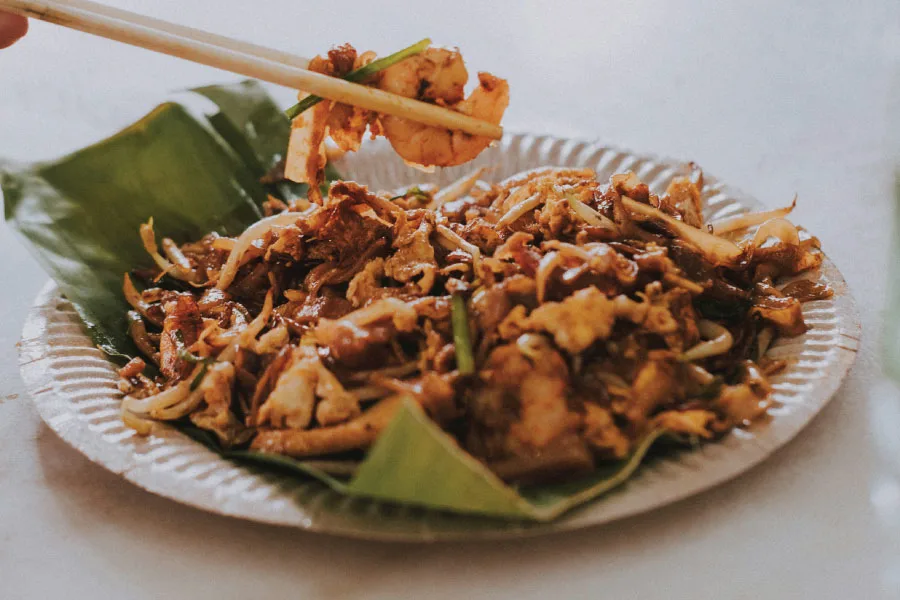
The noodles are usually pan-fried until parts of them become crisp, then cooked with egg, vegetables and slices of meat. The final dish combines chewy and lightly charred textures.
Traditional versions may contain pork, although chicken, beef and seafood variations are also available. Tuaran mee is now found beyond its hometown, but Sabah remains the best place to explore the dish.
20. Fried Noodles and Rice Vermicelli
Fried noodles are among the most practical Malaysian breakfasts, particularly for people buying food on the way to work.
Common choices include:
- Mee goreng
- Mee hoon goreng
- Koay teow goreng
- Maggi goreng
- Singapore-style fried mee hoon
- Economy-style mixed noodles
Some are cooked to order, while others are prepared in large batches and displayed alongside fried eggs, sausages, vegetables, curries and sambal.
At Malay food stalls, diners may select a portion of fried noodles and add side dishes. Mamak restaurants typically prepare mee goreng and Maggi goreng individually, producing a wetter, more intensely seasoned plate.
21. Kuih-Muih
Kuih refers to a broad family of traditional snacks, cakes and pastries found across Malaysia.
They may be sweet or savoury, steamed or fried, and made with ingredients such as rice flour, glutinous rice, coconut milk, palm sugar, pandan, mung beans and tapioca.
Popular breakfast kuih include:
- Kuih seri muka
- Kuih talam
- Kuih lapis
- Ang ku kuih
- Kuih ketayap
- Pulut inti
- Kuih kosui
- Curry puff
- Karipap pusing
- Apam balik
- Onde-onde
- Cucur badak
- Cucur udang
Kuih is commonly purchased from morning markets, roadside stalls, neighbourhood vendors and dedicated Nyonya kuih shops. Many people eat one or two pieces with coffee or tea rather than having a full breakfast.
Recipes and names may differ across communities and regions, even when the finished kuih looks similar.
22. Vadai, Appam and Putu Mayam
Malaysian Indian breakfasts extend well beyond roti canai and thosai.
Vadai is a savoury fried snack usually made with lentils. Crisp outside and soft inside, it may be flavoured with onion, curry leaves and spices.
Appam is a bowl-shaped fermented rice pancake with crisp edges and a soft centre. It may be served with coconut milk, sugar or savoury accompaniments.
Putu mayam consists of fine rice flour noodles served with grated coconut and sugar, sometimes using palm sugar for a deeper caramel flavour.
These dishes are available at Indian restaurants, markets and specialist stalls, although some are sold only during particular morning hours.
Popular Malaysian Breakfast Drinks
Malaysia’s traditional breakfast drinks have their own vocabulary. Knowing a few common terms makes ordering at kopitiams and mamak restaurants much easier.
Kopi
Traditional kopitiam coffee is usually roasted dark and served with condensed milk and sugar.
Common orders include:
- Kopi – coffee with condensed milk
- Kopi O – black coffee with sugar
- Kopi C – coffee with evaporated milk and sugar
- Kopi O kosong – black coffee without sugar
- Kopi C kosong – coffee with evaporated milk but no sugar
- Kopi peng – iced coffee
- Kopi O peng – iced black coffee with sugar
The precise preparation may differ slightly between regions and individual coffee shops.
Teh
Tea follows a similar ordering system:
- Teh – tea with condensed milk
- Teh O – tea with sugar but no milk
- Teh C – tea with evaporated milk and sugar
- Teh O kosong – tea without milk or sugar
- Teh peng – iced milk tea
- Teh tarik – “pulled” milk tea with a frothy top
Milo
Milo is a chocolate malt drink served hot or iced. It is found throughout Malaysia and is commonly ordered at kopitiams, mamak restaurants and school canteens.
Milo dinosaur is an iced Milo topped with additional Milo powder, producing a richer and sweeter drink.
Cham
Cham is a mixture of coffee and tea, usually served with milk and sugar. It combines the roasted character of coffee with the smoother fragrance of tea.
Horlicks and Other Malted Drinks
Horlicks is another familiar malted beverage available at many traditional eateries. Other options may include barley, herbal tea, soy milk and freshly prepared local drinks.
Where to Eat Breakfast in Malaysia
Kopitiams
A kopitiam is a traditional coffee shop. Some operate their own kitchen, while others contain multiple independent food stalls.
A typical kopitiam may offer coffee and toast alongside wantan mee, curry mee, nasi lemak, chee cheong fun or fried noodles.
Mamak Restaurants
Mamak restaurants are Indian Muslim eateries known for roti canai, thosai, mee goreng, nasi kandar and teh tarik. Many open from early morning until late at night, while some operate 24 hours.
Hawker Centres
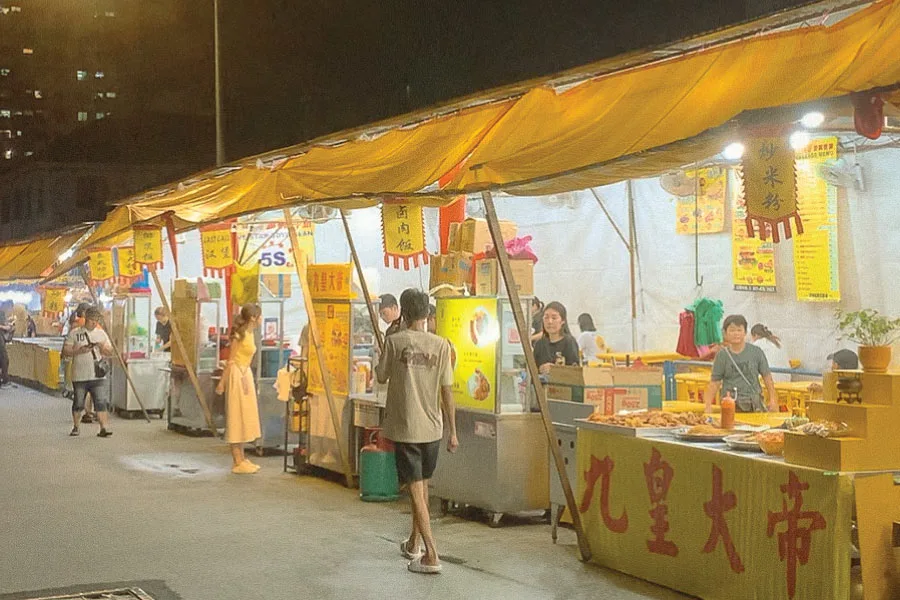
Hawker centres bring numerous independent food vendors together in one location. They are useful for groups because each person can order a different dish.
Wet Markets and Morning Markets
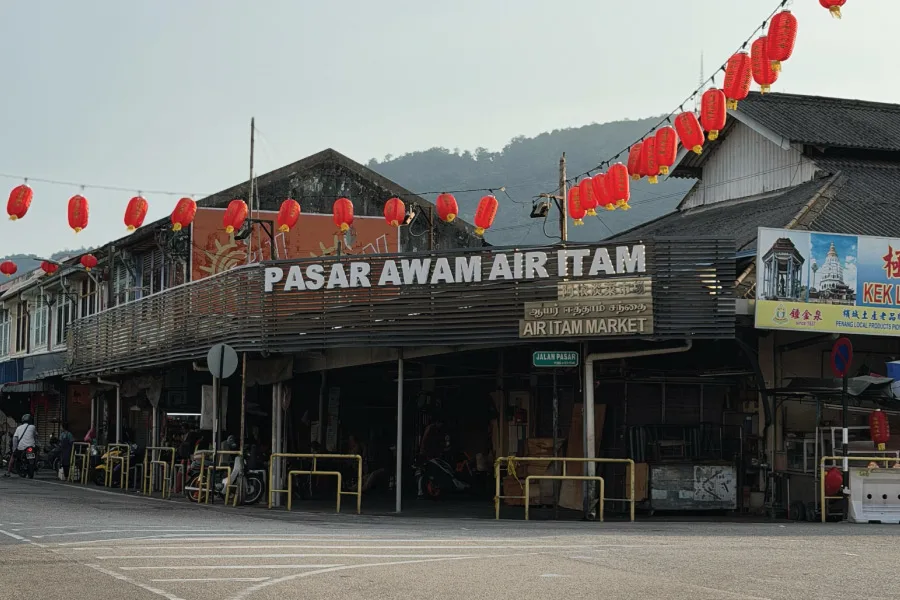
Markets are among the best places to discover highly localised breakfasts. Besides fresh produce, many contain cooked-food sections selling noodles, rice dishes, kuih and drinks.
Roadside Stalls
Roadside breakfast vendors often specialise in one dish, such as nasi lemak, nasi dagang or fried noodles. Many serve takeaway customers and may close once everything has sold.
Dim Sum Restaurants
Traditional dim sum restaurants are busiest during breakfast and brunch. Weekends can be crowded, particularly at long-established restaurants.
How to Order Breakfast in Malaysia
Ordering systems differ according to the type of establishment.
At a mamak restaurant, a server normally comes to the table to take your entire order. At a self-service stall, you may need to select your food at the counter and pay immediately.
In a traditional kopitiam:
- Find a table.
- Order drinks from the coffee-shop operator.
- Order food separately from the stall you want.
- Pay either when the food arrives or directly at the stall.
If a stall is particularly busy, note your table number before ordering.
Useful phrases include:
- Makan sini – eating here
- Bungkus or tapau – takeaway
- Tak mahu pedas – not spicy
- Kurang pedas – less spicy
- Kurang manis – less sweet
- Kosong – without sugar, when ordering a drink
- Tambah telur – add an egg
English is widely understood in many Malaysian cities, but pointing to a dish or referring to its menu number is also common.
Is Malaysian Breakfast Spicy?
Not every Malaysian breakfast is spicy, but chilli and sambal are common.
Milder options include:
- Kaya toast and eggs
- Idli
- Plain thosai
- Koay teow th’ng
- Dim sum
- Plain chee cheong fun, depending on its sauce
- Putu mayam
- Selected kuih
For dishes such as curry mee or nasi lemak, the chilli may be added separately. Ask for less chilli or request that the sambal be placed on the side if you prefer a milder meal.
Keep in mind that spice levels are subjective. What a vendor considers mildly spicy may still feel hot to an unaccustomed diner.
Are Malaysian Breakfasts Halal?
Many Malaysian breakfast dishes are halal, but the same dish can be prepared differently by different vendors.
Malay and Indian Muslim stalls are generally suitable for Muslim diners. However, some Chinese kopitiam dishes may contain pork, lard, cooking wine or non-halal sauces, even when pork is not visibly listed in the dish’s English name.
Look for recognised halal certification where required, or choose Muslim-operated establishments. Do not assume that every branch, stall or variation of a particular dish has the same halal status.
Vegetarian diners should also ask whether stocks, sambal and sauces contain dried shrimp, anchovies, meat or lard.
Which Malaysian Breakfast Should You Try First?
For a first experience of Malaysian breakfast, start with dishes that represent different parts of the country’s food culture:
- Nasi lemak for Malaysia’s iconic coconut rice and sambal combination
- Roti canai with dhal and curry at a mamak restaurant
- Kaya toast, soft-boiled eggs and kopi at a traditional kopitiam
- A locally popular noodle dish such as curry mee, wantan mee or koay teow th’ng
- Thosai or idli at a South Indian restaurant
- Sarawak laksa or kolo mee when visiting Sarawak
- Nasi dagang or nasi kerabu on the East Coast
- A selection of kuih from a morning market
Rather than searching only for the most famous stall, pay attention to what residents are eating nearby. A busy neighbourhood coffee shop or market stall can reveal as much about Malaysian breakfast culture as a nationally known restaurant.
Frequently Asked Questions About Malaysian Breakfast
What is the most popular breakfast in Malaysia?
Nasi lemak, roti canai and kaya toast with soft-boiled eggs are among Malaysia’s most recognisable breakfasts. However, the most popular choice varies by region, community and personal preference.
What is a traditional Malaysian breakfast?
There is no single traditional Malaysian breakfast. Depending on the setting, it could be nasi lemak, roti canai, thosai, noodle soup, dim sum, kuih or kopitiam toast and eggs.
Is nasi lemak only eaten for breakfast?
No. Nasi lemak is commonly eaten for breakfast, lunch, dinner and supper. Morning versions are often simpler, while restaurant versions may include larger portions and more elaborate side dishes.
What is served with kaya toast?
Kaya toast is usually paired with soft-boiled eggs and coffee or tea. The eggs are often seasoned with soy sauce and white pepper.
What is the difference between a kopitiam and a mamak restaurant?
A kopitiam is traditionally a coffee shop and may house multiple food stalls. A mamak restaurant is an Indian Muslim eatery commonly serving roti canai, thosai, mee goreng, nasi kandar and teh tarik.
What is the best breakfast drink in Malaysia?
Kopi, teh tarik and Milo are popular choices. Kopi suits those who prefer strong traditional coffee, while teh tarik is creamier and sweeter. Drinks can usually be customised with less sugar or no sugar.
Is breakfast expensive in Malaysia?
Neighbourhood stalls and traditional eateries generally offer affordable breakfasts, although prices vary by city, location and ingredients. Restaurants in shopping malls, hotels and tourism districts usually charge more.
Discover Malaysia Through Breakfast
Breakfast is one of the most accessible ways to understand Malaysia’s food culture.
It reveals how different communities use rice, noodles, bread, coconut milk, spices and traditional cooking techniques in distinct ways. It also shows how Malaysian food resists simple categories: Chinese noodle dishes may carry regional Malaysian identities, Indian breads have become everyday favourites across communities, and Malay rice dishes can vary dramatically from one state to another.
Whether you begin with nasi lemak wrapped in banana leaf, a freshly cooked roti canai, a bowl of Sarawak laksa or toast dipped into soft-boiled eggs, Malaysian breakfast offers much more than a morning meal.
It is a daily expression of the country’s history, geography and multicultural life—served one plate, bowl and cup at a time.