Penang is often called the food capital of Malaysia — but that label barely scratches the surface.
Across both the island and the mainland, food here is not just about taste. It is shaped by migration, trade, culture, and everyday routines that have been passed down for generations. From roadside hawker stalls to long-standing kopitiams and modern restaurants, Penang’s food scene reflects a living history that continues to evolve.
This guide is designed to help you navigate that landscape — whether you are visiting for the first time or returning with a deeper curiosity. It covers what to eat, where to eat, and how to experience Penang like a local.
What Makes Penang Food Unique
Penang’s food culture stands out not just because of its variety, but because of how deeply it is embedded in daily life.
At its core, Penang food is a result of cultural convergence. Malay, Chinese, Indian, and Peranakan (Nyonya) influences intersect here, creating dishes that are layered in flavour and history. Recipes are often preserved within families, passed down through generations, and refined over decades.
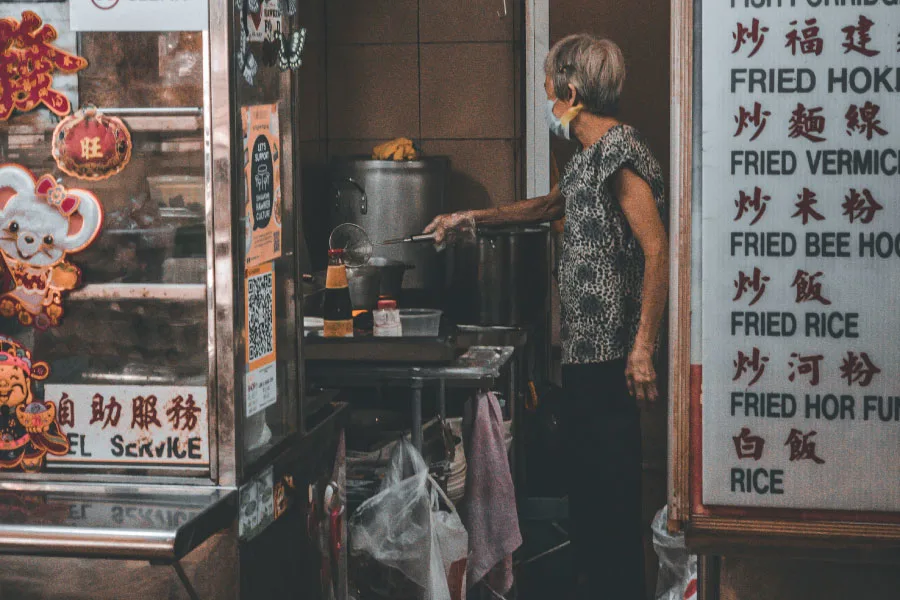
Another defining feature is the hawker culture. Unlike many cities where street food is informal or temporary, Penang’s hawker scene is structured, consistent, and deeply respected. Many stalls specialise in a single dish, perfected over years — sometimes decades.
There is also a strong sense of place. The same dish can taste different depending on where you have it — whether it’s a roadside stall in Air Itam, a kopitiam in George Town, or a neighbourhood spot on the mainland.
Must-Try Foods in Penang
Penang’s food culture is best experienced through its most iconic dishes — each representing a blend of heritage, technique, and everyday life. These are the essential foods you should not miss when exploring Penang.
Char Koay Teow
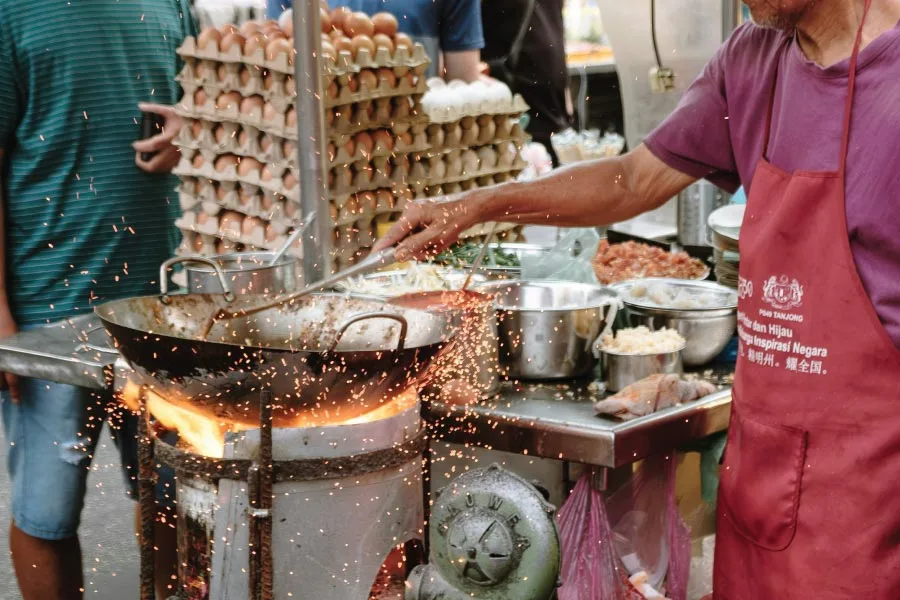
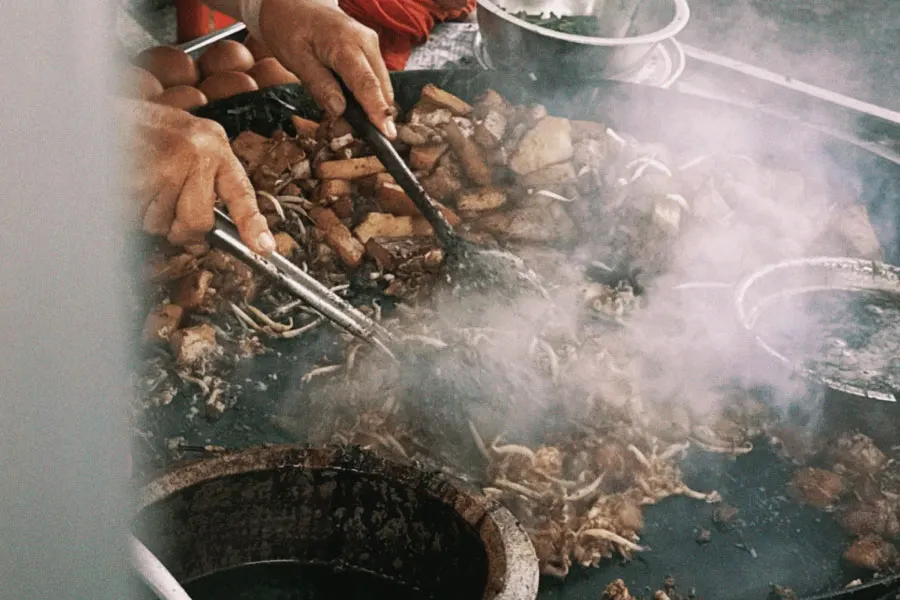
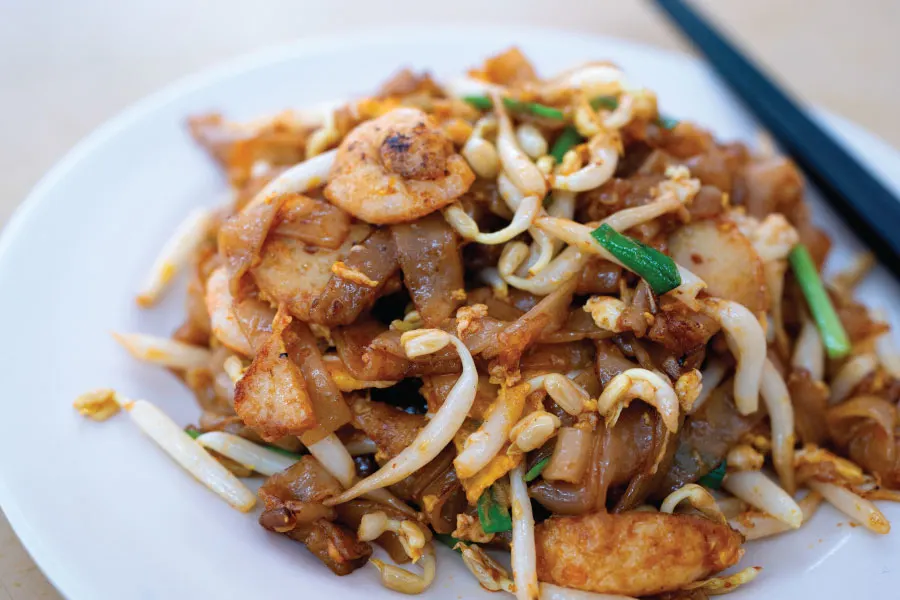
Few dishes define Penang as strongly as char koay teow. This stir-fried flat rice noodle dish is cooked over high heat with prawns, egg, Chinese sausage, and bean sprouts, creating a smoky aroma known as wok hei.
What sets Penang’s version apart is its balance — not overly greasy, yet deeply flavourful. Many stalls specialise in this single dish, often perfected over decades.
Assam Laksa
Ranked among the world’s best dishes, assam laksa is a bold, tangy noodle soup made with mackerel, tamarind, and aromatic herbs. Its flavour profile leans heavily on sourness, balanced with a hint of sweetness and spice.
It is typically garnished with mint leaves, pineapple, cucumber, and shrimp paste, creating layers of freshness and depth. Each bowl reflects Penang’s coastal identity and love for strong, complex flavours.
Penang Hokkien Mee
Unlike the dark, soy-based version found in Kuala Lumpur, Penang Hokkien mee is a prawn-based noodle soup known for its rich, umami broth. Made by simmering prawn shells and pork bones, the soup carries a deep sweetness and seafood intensity.
Served with yellow noodles, rice vermicelli, prawns, boiled egg, and crispy shallots, it is a comforting yet flavour-packed dish often enjoyed for breakfast or lunch.
Nasi Kandar
Nasi kandar is more than just a meal — it is a cultural experience rooted in Penang’s Indian Muslim heritage. It consists of steamed rice served with a variety of curries and side dishes, including fried chicken, squid, beef, okra, and fish roe.
A defining feature is the mixing of multiple curries over the rice, creating a rich, layered combination of flavours. Each stall has its own style, making every plate slightly different.
Rojak (Fruit Rojak)
Penang-style rojak is a refreshing fruit salad that stands apart from its counterparts in other parts of Malaysia. It typically features a mix of fruits such as pineapple, guava, cucumber, and jambu, tossed in a thick, savoury-sweet shrimp paste sauce.
Crushed peanuts add texture, while the sauce delivers a balance of sweetness, saltiness, and umami. It is often enjoyed as a light snack or dessert, especially in the afternoon heat.
Cendol
Cendol is one of Penang’s most iconic desserts, especially in its tropical climate. It is made with shaved ice, rich coconut milk, palm sugar (gula melaka), and green jelly made from rice flour and pandan.
The combination creates a cooling, creamy, and slightly caramel-like flavour. Some variations include red beans or glutinous rice, adding more texture and depth. It is a must-have treat during hot afternoons.
Curry Mee
Penang curry mee is a coconut milk-based noodle soup that combines richness with a subtle spicy kick. It is typically served with yellow noodles or vermicelli, tofu puffs, shrimp, cockles, and a spoonful of chilli paste.
The broth is fragrant and creamy, with layers of spice that build gradually. Compared to other versions in Malaysia, Penang’s curry mee often has a lighter consistency while maintaining strong flavour.
Penang Chee Cheong Fun
Unlike the savoury versions found elsewhere, Penang chee cheong fun is served with a unique combination of sweet sauce, chilli paste, and sometimes shrimp paste. The silky rice noodle rolls are soft and delicate, acting as a base for the bold sauces.
Some variations include sesame seeds or pickled green chillies for added texture and contrast. It is commonly eaten as a light breakfast or snack.
Nyonya Kuih
Nyonya kuih represents the sweet side of Penang’s Peranakan heritage. These colourful bite-sized treats are made from ingredients like glutinous rice, coconut milk, pandan, and palm sugar.
Each kuih has its own texture — from soft and chewy to slightly firm and layered. Beyond taste, they reflect tradition, craftsmanship, and the cultural blending of Chinese and Malay influences.
Where to Eat in Penang
Penang’s food is not concentrated in a single area — it is spread across neighbourhoods, each with its own identity, specialties, and rhythm.
Understanding where to eat helps you plan your journey more efficiently, whether you are focusing on street food, local favourites, or exploring beyond the usual tourist zones.
George Town (Heritage & Street Food Core)
George Town is the heart of Penang’s food culture and often the starting point for most visitors. This UNESCO World Heritage city is packed with hawker stalls, kopitiams, traditional eateries, and an increasing number of modern cafés and restaurants.
Areas like Lebuh Chulia, Kimberley Street, and Campbell Street come alive with food throughout the day and into the night. You’ll find everything from char koay teow and wantan mee to late-night street food and dessert stalls.
While some spots are more tourist-heavy, there are still plenty of long-standing stalls hidden within coffee shops and side streets that continue to serve locals daily.
Air Itam (Iconic Local Favourites)
Located just outside George Town, Air Itam is one of the best places to experience Penang’s hawker culture in a more local setting. It is home to some of the island’s most well-known food stalls, particularly for dishes like assam laksa and cendol.
The main hawker stretch near the market is busy throughout the day, with many stalls drawing both locals and visitors. Despite its popularity, Air Itam still retains a strong neighbourhood feel, making it a great place to see how locals eat on a daily basis.
Pulau Tikus & Gurney (Traditional Meets Modern)
Pulau Tikus offers a balance between traditional Penang food and a more modern dining environment. The Pulau Tikus Market is a popular breakfast spot, where you can find a variety of local dishes under one roof.
Nearby, Gurney Drive has evolved into a mix of hawker centres, shopping malls, cafés, and restaurants. While the famous hawker centre attracts crowds, there are also many lesser-known eateries in the surrounding neighbourhood worth exploring.
Bayan Lepas & Bayan Baru (Local Living)
This area, located closer to the airport, has developed into a strong food hub catering mainly to residents and working professionals. You’ll find a mix of hawker stalls, kopitiams, cafés, and casual dining spots.
Bayan Baru Market is particularly known for its variety of local food options, especially during breakfast and lunch hours. At night, the area becomes lively with supper spots and late-night eateries, making it a good place for a more local, less tourist-driven experience.
Balik Pulau (Rural Charm & Fresh Ingredients)
Balik Pulau offers a completely different side of Penang. Located on the quieter side of the island, it is known for its slower pace, countryside atmosphere, and access to fresh local ingredients.
Food here often focuses on simplicity and freshness, with seafood restaurants, durian farms (seasonal), and traditional eateries forming the core of its food scene. It’s a great place to explore if you want to go beyond the typical food routes.
Butterworth (Underrated Food Scene)
Across the Penang Bridge, Butterworth and the mainland offer a food culture that is often overlooked but deeply rewarding. Many eateries here have been operating for decades, serving loyal local communities.
Compared to the island, the mainland tends to be less commercialised, which often translates into more consistent pricing and a stronger local character. You’ll find classic kopitiams, traditional dishes, and some of the best seafood spots in Penang.
Bukit Mertajam (Mainland’s Food Hub)
Bukit Mertajam has grown into one of the mainland’s key food destinations. It is known for its vibrant street food scene, coffee shops, and a mix of traditional and modern eateries.
Food here is diverse and often less influenced by tourism, making it a great place to experience Penang food from a different perspective. Night markets and roadside stalls also contribute to its lively atmosphere.
Types of Dining Experiences in Penang
While Penang is best known for its street food, the reality is far more layered. From roadside stalls to heritage kopitiams, seafood feasts, and modern dining concepts, the island and mainland together offer a wide spectrum of food experiences.
Understanding these categories helps you decide not just what to eat, but how you want to experience Penang food.
Street Food & Hawker Culture (The Backbone of Penang)
Street food is the foundation of Penang’s food identity. Hawker stalls and food courts are where many of the island’s most iconic dishes are found — often cooked by vendors who have specialised in a single dish for decades.
These stalls are typically located in hawker centres, coffee shops, or along roadside stretches, operating at specific hours of the day. The focus is on consistency, technique, and efficiency — not presentation.
For many locals, this is everyday food. For visitors, it is often the highlight of the Penang experience.
Traditional & Old-School Eats (Heritage & Time Capsules)
Beyond street food, Penang is home to a large number of old-school eateries and kopitiams that have been operating for decades. These places often preserve not just recipes, but also their original interiors — from marble tables and tiled walls to handwritten signboards.
The food here tends to be simple, familiar, and deeply rooted in tradition. Many are family-run businesses, passed down through generations, maintaining consistency over time.
Dining in these places is as much about atmosphere as it is about food — offering a glimpse into Penang’s past.
Seafood Restaurants
Seafood plays a significant role in Penang’s dining scene, particularly in coastal areas and on the mainland. Unlike hawker food, seafood meals are often communal — designed for sharing across multiple dishes.
On the island, you’ll find seafood restaurants in areas like Teluk Bahang and Batu Ferringhi, often with scenic views. On the mainland, places like Butterworth and Seberang Perai are known for offering equally strong — sometimes even better — seafood options at more local prices.
Cooking styles typically focus on freshness, with dishes like steamed fish, chilli crab, butter prawns, and claypot preparations.
Peranakan (Nyonya) Restaurants
Peranakan or Nyonya cuisine represents one of the most culturally significant aspects of Penang food. It blends Chinese ingredients with Malay spices and cooking techniques, resulting in dishes that are complex, aromatic, and deeply layered.
Signature dishes such as ayam pongteh, asam pedas, and otak-otak reflect this fusion. Many Nyonya restaurants also place emphasis on heritage, with interiors and recipes that reflect family traditions.
This category offers a deeper understanding of Penang’s cultural identity beyond street food.
Modern & Contemporary Restaurants
In recent years, Penang’s food scene has expanded to include a growing number of modern cafés, fusion concepts, and contemporary restaurants. These establishments often reinterpret traditional flavours or introduce global influences into local ingredients.
George Town, in particular, has seen a rise in creative dining spaces — from minimalist cafés to curated dining experiences. While different from traditional hawker food, these places reflect the evolving tastes of a new generation.
They are also popular among younger locals and travellers looking for a different dining atmosphere.
Halal Food in Penang
Penang offers a wide range of halal food options, making it accessible to Muslim travellers. Nasi kandar is the most well-known category, but halal food extends far beyond that.
From Malay cuisine and Indian Muslim eateries to halal-certified restaurants and cafés, there are options across both the island and mainland. Many hawker centres also include halal stalls, allowing for a mixed dining experience.
Understanding halal options can help travellers plan their food journey more comfortably.
Best Places for Street Food & Hawker Centres
One of the best ways to experience Penang is through its hawker centres and street food hotspots. These places bring together multiple stalls in one location, each specialising in a particular dish — from char koay teow and curry mee to desserts like cendol and ais kacang.
Some are well-known and bustling with visitors, while others remain deeply local, serving nearby communities daily. Exploring a mix of both gives you a more complete picture of Penang’s food culture across the island and mainland.
Gurney Drive Hawker Centre
Gurney Drive Hawker Centre is one of the most well-known food destinations in Penang. Located near the seafront, it offers a wide variety of local dishes in a single, convenient location — from char koay teow and oyster omelette to satay and rojak.
While it is more tourist-oriented, it remains a practical starting point for first-time visitors who want to sample multiple Penang dishes in one place. Expect crowds, especially in the evening.
Chulia Street Night Hawker Stalls
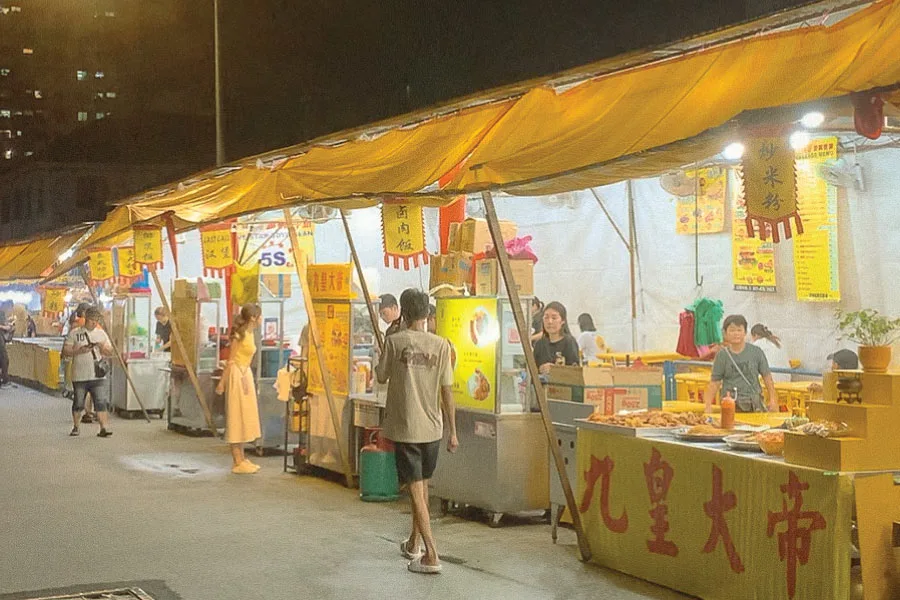
As the sun sets, Chulia Street transforms into one of Penang’s most vibrant night food scenes. Rows of roadside stalls line the street, serving everything from wantan mee and grilled seafood to lok lok and desserts.
It is one of the best places to experience Penang’s late-night food culture, attracting both locals and visitors. The atmosphere is lively, slightly chaotic, and very much part of the experience.
New Lane Hawker Centre
New Lane is a long-standing street food spot that offers a wide range of Penang favourites. Unlike more curated food courts, New Lane retains a raw, authentic street-side setup where stalls line both sides of the road.
The variety here makes it ideal for group dining, as everyone can order different dishes from different stalls. It is particularly popular during dinner hours and into the night.
Cecil Street Market
Cecil Street Market is one of the best places to experience Penang’s morning and afternoon food culture. This market is known for its strong lineup of traditional hawker stalls, serving breakfast and lunch favourites.
Compared to more tourist-heavy locations, Cecil Street feels more local and grounded. Many stalls here have long histories, with recipes passed down through generations.
Fisherman’s Wharf Food Court
Located near the coastal area of Sungai Pinang, Fisherman’s Wharf offers a more relaxed dining environment compared to traditional hawker centres. The open-air setup and seaside atmosphere make it a popular spot for evening meals.
You’ll find a mix of local dishes and seafood options here, making it a good place to enjoy Penang food in a slightly more laid-back setting.
Air Itam Market
Air Itam Market is one of the most iconic food locations in Penang, especially known for its famous assam laksa and cendol stalls located just outside the market area.
The entire stretch is packed with hawker stalls offering a wide variety of dishes, creating a vibrant and busy atmosphere throughout the day. It remains one of the best places to experience Penang’s hawker culture in a more local environment.
Pulau Tikus Market Area
Pulau Tikus Market is a go-to breakfast spot for many locals. The market and its surrounding coffee shops houses a variety of hawker stalls serving everything from chee cheong fun and curry mee to nasi lemak and kuih.
It is best visited in the morning when the selection is at its peak. It has become one of the popular breakfast spots for locals and tourists alike.
Super Tanker Food Court
Super Tanker Food Court is one of the more established hawker centres on Penang Island, offering a wide range of dishes in a spacious, covered environment.
It is particularly popular among locals for dinner, with stalls serving classic Penang dishes as well as seafood. The organised layout makes it more comfortable compared to roadside hawker setups.
Chai Leng Park
Located in Butterworth, Chai Leng Park is one of the mainland’s most vibrant street food areas. The area comes alive in the evening with a wide range of hawker stalls and casual eateries.
It offers a more local and less tourist-driven experience compared to the island. You’ll find everything from fried noodles to grilled seafood and local desserts.
Pek Kong Cheng Hawker Centre
Pek Kong Cheng Hawker Centre is a well-known spot among locals in the mainland, offering a variety of affordable and traditional dishes.
The atmosphere is casual and community-driven, with many regulars frequenting the same stalls daily. It is a good place to explore Penang food beyond the more popular tourist areas.
Penang Food Itinerary: How to Eat Your Way Through Penang
Planning what to eat in Penang can feel overwhelming — not because of a lack of options, but because of how much there is to try.
A good food itinerary is not about cramming as many dishes as possible into a day. It is about understanding when and where to eat, and how different areas come alive at different times.
Below are suggested food routes to help you experience Penang in a more structured and enjoyable way.
1-Day Penang Food Itinerary (First-Time Visitors)
If you only have one day in Penang, focus on George Town + nearby areas, where many iconic dishes are easily accessible.
Morning (8:00 AM – 11:00 AM)
Start with a Local Breakfast
Head to a morning market or kopitiam to experience Penang’s breakfast culture.
- Pulau Tikus Market
- Cecil Street Market
Try:
- Penang chee cheong fun
- Curry mee
- Nasi lemak
- Local coffee (kopi)
Lunch (11:30 AM – 2:00 PM)
Nasi Kandar Experience
For lunch, go for one of Penang’s most iconic meals — nasi kandar.
Choose a well-known nasi kandar spot in George Town and experience the variety of curries and side dishes. Mixing gravies is part of the experience.
Afternoon (2:30 PM – 5:00 PM)
Light Bites & Desserts
The afternoon heat is perfect for lighter snacks and desserts.
- Cendol
- Fruit rojak
- Ice-based desserts
You can explore areas like:
- Air Itam (for famous cendol & assam laksa)
- George Town dessert spots
Dinner (6:00 PM – 9:00 PM)
Hawker Centre or Street Food
Head to a hawker centre for a wide selection of dishes in one place.
- Gurney Drive Hawker Centre
- New Lane Hawker Centre
Try:
- Char koay teow
- Hokkien mee
- Oyster omelette
Late Night (9:30 PM onwards)
Optional Supper
If you still have room, explore Penang’s late-night food scene.
- Chulia Street night stalls
- Local supper spots
2–3 Day Penang Food Itinerary (Deeper Exploration)
If you have more time, you can explore beyond George Town and experience both island and mainland food culture.
Day 1: George Town Food Trail
Focus on the heritage core and its surrounding streets.
- Breakfast: Kopitiam or market
- Lunch: Nasi kandar
- Afternoon: Desserts & snacks
- Dinner: Street food / hawker centre
This day is about covering the essentials in a compact area.
Day 2: Air Itam + Balik Pulau (Local & Rural Experience)
Move slightly out of the city centre.
Air Itam:
- Assam laksa
- Cendol
- Local hawker stalls
Balik Pulau:
- Seafood restaurants
- Traditional eateries
- Seasonal durian (if applicable)
This day gives you a more local and less commercialised experience.
Day 3: Mainland Penang (Hidden Food Scene)
Explore the mainland side for a different perspective.
Butterworth:
- Chai Leng Park (evening food scene)
- Traditional kopitiams
Bukit Mertajam:
- Street food
- Night markets
- Local favourites
Mainland Penang often offers equally strong — sometimes more authentic — food experiences with fewer crowds.
Local Tips for Eating in Penang
Eating in Penang is not just about knowing what to order — it’s about understanding timing, habits, and how locals navigate the food scene. These small details can significantly improve your overall experience.
Follow the Timing of the Stall
Many of Penang’s best food stalls operate only during specific hours — some only in the morning, others only at night. A famous stall may be closed by early afternoon once it sells out.
Planning your meals based on timing, rather than just location, is key to experiencing the best of Penang.
Expect Simple Setups
Some of the best food in Penang is served in very modest environments — roadside stalls, open-air hawker centres, or old kopitiams.
Cleanliness standards vary, but many of these places have been operating for decades and are trusted by locals. The focus is always on taste rather than presentation.
Cash is Still Common
While digital payments are becoming more common, many hawker stalls still operate on a cash-only basis. It is always a good idea to carry small notes and coins when exploring food spots.
Be Prepared to Share Tables
At busy hawker centres, sharing tables with strangers is normal. It is part of the dining culture, especially during peak hours.
Turnover is usually fast, so even crowded places tend to move quickly.
Don’t Chase Only Famous Spots
While some stalls are well-known, many lesser-known places offer equally good — sometimes better — food without long queues.
Exploring neighbourhoods like Air Itam or mainland areas can often lead to more rewarding experiences.
Eat in Smaller Portions
With so many dishes to try, it is better to order smaller portions and share when possible. This allows you to experience a wider variety of food without getting full too quickly.
Group Your Food Stops
Penang traffic and parking can be challenging, especially in George Town. Plan your route by grouping food spots within the same area to save time and maximise your experience.
FAQs About Penang Food
These are some of the most common questions travellers have when planning a food trip to Penang.
What is Penang famous for food?
Penang is famous for dishes such as char koay teow, assam laksa, nasi kandar, and Penang Hokkien mee. The island is also known for its strong street food culture, where many dishes are cooked by specialised hawkers with decades of experience.
What should I eat first in Penang?
For first-time visitors, it is recommended to start with a mix of signature dishes such as char koay teow, assam laksa, and nasi kandar. These dishes represent the diversity of Penang’s food culture and are widely available across the island.
Where is the best place to eat in Penang?
George Town is the most convenient starting point, offering a wide variety of food options in one area. However, places like Air Itam, Pulau Tikus, and mainland areas such as Butterworth and Bukit Mertajam also offer excellent food experiences.
Is Penang food halal?
Penang has a wide range of halal food options, particularly nasi kandar and Malay cuisine. Many restaurants and hawker centres also have halal-certified stalls or Muslim-friendly options.
Is Penang food spicy?
Some Penang dishes can be spicy, especially those influenced by Malay and Indian cuisine. However, many dishes are not overly spicy, and spice levels can often be adjusted.
What time is best for food hunting in Penang?
Morning and evening are generally the best times. Many breakfast stalls operate early and close by noon, while street food and hawker centres are most active in the evening and at night.
Is Penang expensive for food?
Penang is generally affordable for food, especially at hawker stalls and local eateries. Prices may be higher at tourist areas or modern restaurants, but overall, it remains one of the best places for value-for-money food experiences.
How many days do I need to explore Penang food?
While you can experience the basics in one day, spending 2–3 days allows you to explore more areas, including mainland Penang, and enjoy a wider range of dishes at a more relaxed pace.
Penang’s food scene is not something you can fully experience in a single visit.
The more you explore, the more you realise that each dish, each stall, and each neighbourhood tells a different story. Whether it’s a bowl of noodles perfected over decades or a new café experimenting with local flavours, Penang continues to evolve while staying rooted in its traditions.
And perhaps that’s what makes it special — it is not just about finding the best food, but about understanding the culture behind it.