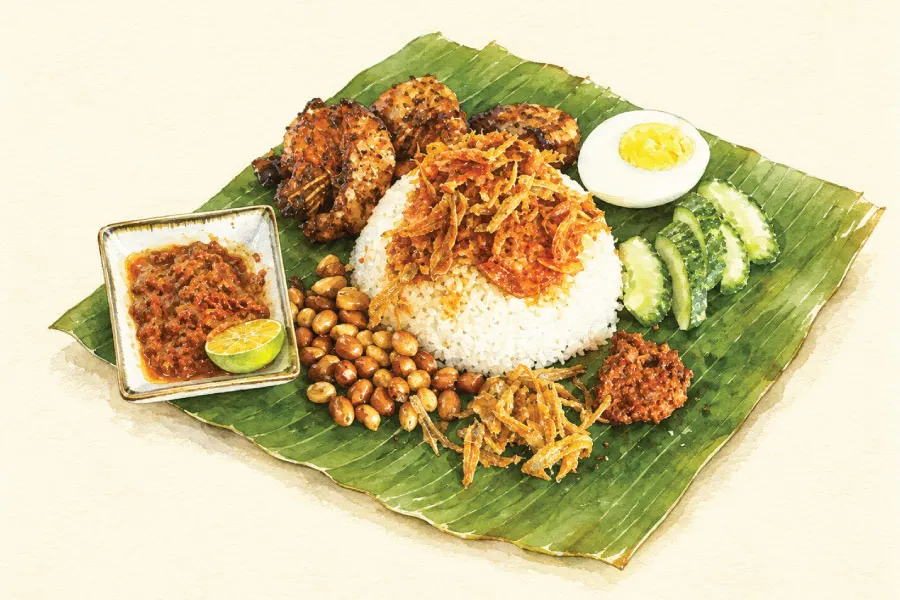
Few dishes are as closely associated with Malaysia as Nasi Lemak. Recognisable by its fragrant coconut rice, spicy sambal and assortment of accompaniments, Nasi Lemak can be a simple breakfast wrapped in banana leaf or a substantial meal topped with fried chicken, rendang and other dishes.
Found everywhere from roadside stalls and traditional markets to kopitiams, restaurants and hotels, Nasi Lemak cuts across communities, regions and occasions. It is commonly regarded as one of the dishes that best represents Malaysian food.
But what exactly is Nasi Lemak, and what makes it different from an ordinary plate of rice?
Quick Answer: What Is Nasi Lemak?
Nasi Lemak is a Malaysian rice dish traditionally made with rice cooked in coconut milk and served with sambal, anchovies, peanuts, cucumber and egg.
The coconut milk gives the rice its characteristic richness and fragrance, while the accompaniments bring together spicy, savoury, sweet, salty and refreshing flavours.
Numerous variations exist today, with additional dishes ranging from fried chicken and sambal sotong to beef rendang.
What Does Nasi Lemak Mean?
The name comes from the Malay language.
Nasi means rice, while lemak can refer to richness or creaminess in the context of food.
The name therefore reflects one of the dish’s defining characteristics: rice enriched with coconut milk.
While the ingredients may change considerably depending on where you order it, the fragrant coconut rice remains at the heart of Nasi Lemak.
Where Did Nasi Lemak Come From?
The precise origins of Nasi Lemak are difficult to pin down to a single place or moment.
The dish developed within the Malay culinary traditions of the region, where rice and coconut have long been important ingredients. Cooking rice with coconut milk created something richer and more aromatic than plain steamed rice, while sambal and other accompaniments turned it into a complete meal.
Nasi Lemak has subsequently become deeply embedded in Malaysian everyday food culture.
Today, it is eaten by Malaysians of different backgrounds and is available virtually throughout the country.
What Is In a Traditional Nasi Lemak?
At its simplest, a traditional serving of Nasi Lemak consists of several essential components.
Coconut Rice
The foundation of Nasi Lemak is rice cooked with coconut milk. Pandan leaves are commonly added during cooking for additional fragrance, while some recipes incorporate ginger, lemongrass or other aromatics.
Good Nasi Lemak rice should be fragrant and rich without becoming excessively heavy or greasy.
Sambal
Sambal provides much of the personality of a plate of Nasi Lemak.
Typically made using chillies and other aromatics, Nasi Lemak sambal can vary enormously between cooks. Some are fiery and savoury, while others have a noticeably sweeter flavour.
This means two plates containing otherwise similar ingredients can taste completely different because of their sambal.
Ikan Bilis
Small dried anchovies, known locally as ikan bilis, are usually fried until crisp.
Their intense salty and savoury flavour provides an important contrast to the richer coconut rice.
Peanuts
Roasted or fried peanuts add crunch and nuttiness. They are commonly served together with the ikan bilis, although preparation styles differ between vendors.
Egg
Traditional versions may include a slice or half of a hard-boiled egg.
Other versions substitute or supplement this with a fried egg, particularly when Nasi Lemak is served as a larger meal.
Cucumber
Slices of fresh cucumber may seem like a minor component, but their coolness and crunch help balance the richness and heat elsewhere on the plate.
Why Is Nasi Lemak So Fragrant?
Coconut milk is responsible for much of the distinctive richness of Nasi Lemak, but pandan leaves are another important component in many recipes.
Pandan contributes a gentle, distinctive aroma that is widely used in Southeast Asian cooking.
Depending on the recipe, ginger, lemongrass and other aromatics may also be added to the rice.
The result should be rice that is flavourful enough to enjoy on its own while still working harmoniously with sambal and the accompanying dishes.
What Does Nasi Lemak Taste Like?
There isn’t one dominant flavour.
Instead, much of the appeal of Nasi Lemak comes from the interaction between its different components.
The coconut rice is rich and aromatic. Sambal contributes chilli heat, sweetness and savouriness. Ikan bilis provide saltiness and crunch, peanuts add nuttiness, and cucumber brings freshness.
Add a piece of fried chicken or spoonful of rendang and another layer of flavour and texture enters the combination.
A good plate of Nasi Lemak is therefore largely about balance.
Is Nasi Lemak a Breakfast Food?
Traditionally, Nasi Lemak is strongly associated with breakfast in Malaysia.
Small packets of Nasi Lemak are a familiar morning sight at roadside stalls, markets, kopitiams and neighbourhood eateries. These simpler versions make an inexpensive and convenient breakfast.
However, Nasi Lemak is no longer confined to the morning.
It is eaten for lunch, dinner and supper, and restaurants specialising in Nasi Lemak can remain busy throughout the day.
This makes it a useful example of how Malaysian eating habits have evolved: a traditional breakfast dish has effectively become an all-day meal.
Why Is Nasi Lemak Wrapped in Banana Leaf?
One of the most traditional ways to serve Nasi Lemak is in a small packet lined or wrapped with banana leaf and paper.
The format makes the meal portable and convenient, particularly for takeaway breakfasts.
Banana leaf can also contribute a subtle aroma, especially when it comes into contact with warm rice and sambal.
These compact packets generally contain a simpler version of Nasi Lemak rather than the elaborate combinations found in restaurants.
Popular Nasi Lemak Toppings
The basic Nasi Lemak can be transformed into a much larger meal by adding other dishes.
Popular additions include:
- Ayam goreng (fried chicken)
- Ayam berempah (spiced fried chicken)
- Beef rendang
- Chicken rendang
- Sambal sotong (squid sambal)
- Sambal udang (prawn sambal)
- Fried fish
- Beef or chicken curry
- Paru (beef lung)
- Fried egg
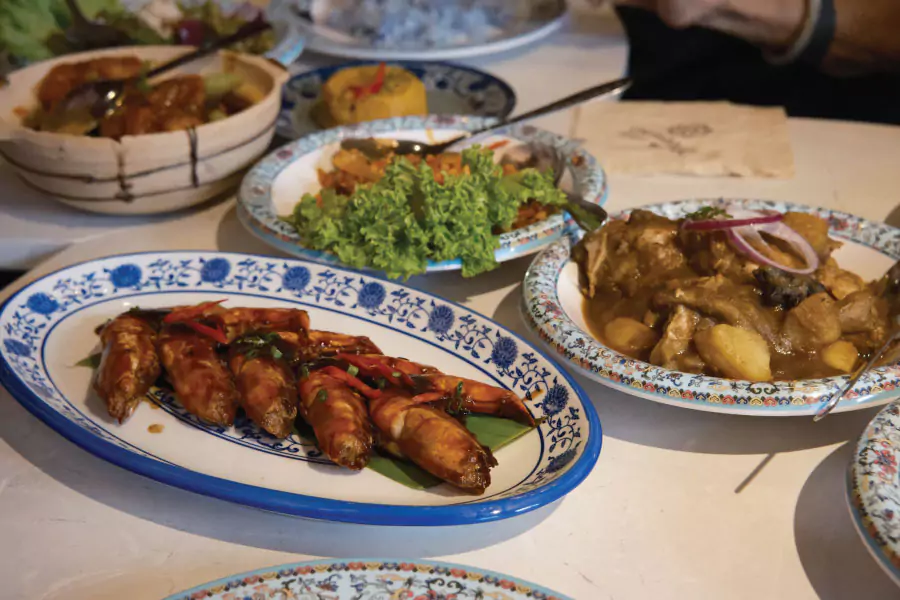
Some Nasi Lemak restaurants display numerous cooked dishes, allowing customers to build their own combinations.
Different Types of Nasi Lemak in Malaysia
There is no single standardised version of Nasi Lemak.
Recipes and accompaniments vary between families, communities, restaurants and regions.
Nasi Lemak Bungkus
This is perhaps the most recognisable everyday version.
Usually wrapped in paper and banana leaf, it commonly contains a modest portion of coconut rice, sambal, ikan bilis, peanuts, cucumber and egg.
It remains particularly associated with breakfast.
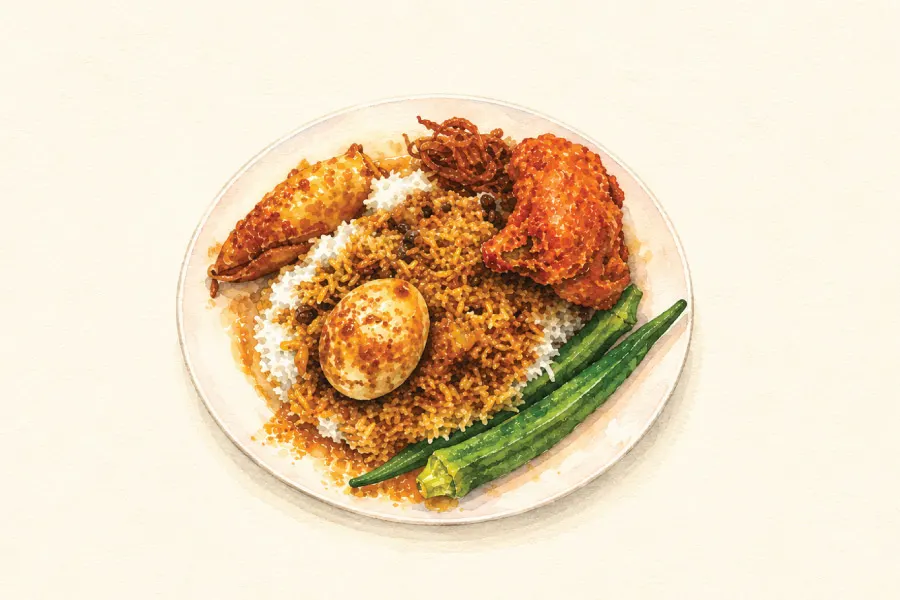
Nasi Lemak with Fried Chicken
One of the most popular modern combinations pairs Nasi Lemak with a large piece of fried chicken.
Ayam goreng berempah is especially popular, with aromatic spices and crispy fried remnants providing another textural contrast to the rice.
Nasi Lemak with Rendang
Rich, slow-cooked rendang works naturally with coconut rice and has become another familiar Nasi Lemak combination.
Beef and chicken rendang are both commonly encountered.
Nasi Lemak with Sambal Sotong
Squid cooked in sambal creates a seafood-focused version with an additional layer of sweetness and savouriness.
Nasi Lemak Kukus
Nasi Lemak Kukus generally refers to versions where the rice is steamed as part of its preparation.
The technique can produce particularly fluffy and aromatic rice and has become the defining feature of some Nasi Lemak businesses.
Nasi Lemak vs Nasi Kandar: What’s the Difference?
Visitors to Malaysia sometimes encounter both dishes and wonder how they differ.
The fundamental difference lies in the rice and the way the meal is assembled.
Nasi Lemak begins with coconut milk rice and is traditionally accompanied by sambal, ikan bilis, peanuts, cucumber and egg.
Nasi Kandar typically uses plain steamed rice or mildly flavoured rice served with a selection of curries and dishes. Mixing several curry gravies over the rice is an important part of the Nasi Kandar experience.
Both can come with fried chicken, curries and seafood, but their culinary foundations are quite different.
Is Nasi Lemak Spicy?
It can be, but it doesn’t necessarily have to be extremely spicy.
Most of the heat comes from the sambal, and recipes differ considerably. Some sambals are fiery, while others emphasise sweetness and savoury depth.
If you have a low tolerance for chilli, asking for less sambal is usually the easiest way to control the heat.
Is Nasi Lemak Malaysia’s National Dish?
Nasi Lemak is frequently described as Malaysia’s national dish, although it is better understood as an informal cultural designation rather than an official title.
What is undeniable is its extraordinary reach.
Nasi Lemak can be found across different regions, communities and price points. It can cost only a few ringgit at a neighbourhood stall or appear as an elaborate interpretation in an upscale restaurant.
Few Malaysian dishes occupy quite the same place in everyday life.
Where Can You Find Nasi Lemak in Malaysia?
Almost anywhere.
Nasi Lemak can be found at:
- Morning markets
- Roadside stalls
- Hawker centres
- Kopitiams
- Malay restaurants
- Mamak restaurants
- Food courts
- Specialist Nasi Lemak restaurants
- Hotels and cafés
Different cities also have their own well-known stalls and restaurants, making Nasi Lemak an interesting dish to explore while travelling around Malaysia.
Frequently Asked Questions About Nasi Lemak
What is Nasi Lemak made of?
At its most traditional, Nasi Lemak consists of coconut rice served with sambal, ikan bilis, peanuts, cucumber and egg. Fried chicken, rendang, sambal squid and many other dishes can be added.
Why is coconut milk used in Nasi Lemak?
Coconut milk gives the rice its characteristic richness, flavour and aroma. It is one of the defining differences between Nasi Lemak and ordinary steamed rice.
Is Nasi Lemak always served with fried chicken?
No. Fried chicken is a popular addition, but it is not essential. Traditional Nasi Lemak can be much simpler, consisting primarily of coconut rice, sambal and several basic accompaniments.
Is Nasi Lemak eaten only for breakfast?
No. Although Nasi Lemak has strong roots as a Malaysian breakfast food, it is now commonly eaten throughout the day.
Is Nasi Lemak vegetarian?
Traditional Nasi Lemak usually contains ikan bilis, and sambal recipes may also contain seafood-based ingredients such as belacan. Vegetarian versions are available, but you should check the ingredients rather than assuming that a meat-free-looking serving is vegetarian.
What is the difference between Nasi Lemak and coconut rice?
Coconut rice refers simply to rice cooked using coconut milk. Nasi Lemak is the complete dish, combining fragrant coconut rice with sambal and traditional accompaniments such as ikan bilis, peanuts, cucumber and egg.
Nasi Lemak can be remarkably simple: coconut rice, a spoonful of sambal, a few ikan bilis, peanuts, cucumber and egg.
Yet that simplicity is also what makes the dish so interesting.
Across Malaysia, countless cooks have developed their own versions of the rice, sambal and accompanying dishes. A humble banana-leaf packet eaten for breakfast and an elaborate restaurant plate piled with fried chicken and rendang may look very different, but both belong to the same evolving food tradition.
For anyone trying to understand Malaysian food, Nasi Lemak is one of the best places to start.