Penang wakes up early—and so does its food.
From steaming bowls of noodles at roadside stalls to kopi and toast in heritage kopitiams, breakfast in Penang is more than just a meal. It is a daily ritual shaped by decades of culture, migration, and local flavour.
Whether you’re searching for:
- Best breakfast in Penang
- Local Penang morning food
- Traditional kopitiam breakfast
- Halal breakfast spots in Penang
- Where locals eat breakfast in Penang
This guide brings together everything you need—from iconic dishes to the best places and hidden gems across the island and mainland.
Why Breakfast in Penang Is Special
Penang’s breakfast scene reflects its multicultural roots—Malay, Chinese, Indian, and Peranakan influences all come together before noon.
Unlike Western-style breakfasts, mornings here are:
- Savoury-heavy (noodles, rice, soups)
- Fast-paced yet social
- Affordable and accessible
- Deeply tied to neighbourhood identity
A single morning could mean hopping between stalls—starting with coffee, followed by noodles, and ending with kuih or dessert.
The Essential Breakfast Foods in Penang
1. Penang Hokkien Mee (Prawn Noodles)
A bowl of Penang Hokkien Mee in the morning feels almost ritualistic. The broth—slow-simmered from prawn shells—carries a deep sweetness balanced by savoury richness. Yellow noodles and rice vermicelli sit beneath slices of pork, prawns, egg, and a spoonful of chilli sambal that ties everything together. It’s comforting without being overly heavy, making it a natural start to the day for many locals.
Why it’s perfect for breakfast:
- Light yet flavourful broth that’s easy on the stomach
- Commonly available from early morning stalls
- Warms you up without feeling too heavy
Highlights:
- Rich prawn-based stock with depth
- Customisable spice level with sambal
- A true Penang signature dish
Why locals love it:
- Familiar, comforting, and consistent
- A daily staple before work
- Deeply tied to Penang identity
2. Char Koay Teow
While often associated with lunch or dinner, char koay teow has its place in the morning—especially in hawker centres that start early. Flat rice noodles are stir-fried over intense heat with prawns, egg, lap cheong, and bean sprouts. The result is smoky, savoury, and slightly sweet, with that unmistakable wok hei aroma that defines the dish.
Highlights:
- Strong wok hei (smoky aroma)
- Rich, savoury flavour profile
- Cooked fresh per order
Why locals love it:
- A Penang favourite across all ages
- Familiar taste with slight variations per stall
- Comfort food with character
3. Nasi Lemak
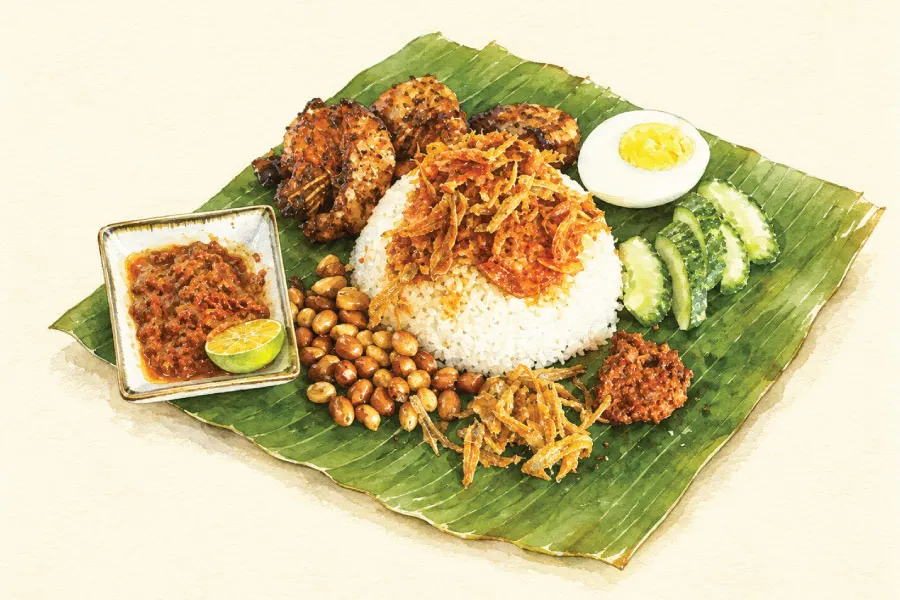
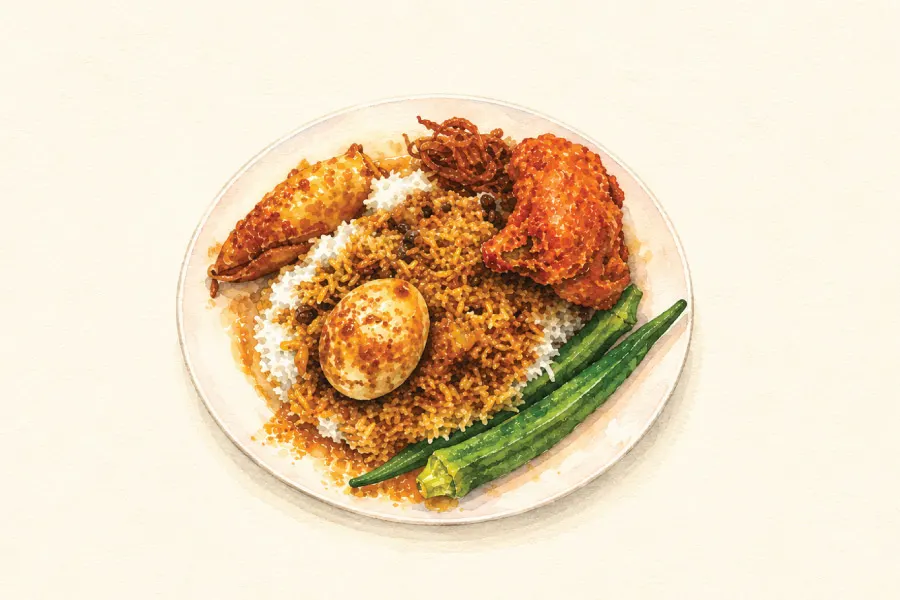
Nasi lemak is one of the most recognisable Malaysian breakfasts, and in Penang, it appears everywhere—from roadside stalls to busy morning markets. Fragrant coconut rice forms the base, paired with sambal, crispy anchovies, peanuts, and egg. Some versions include fried chicken or rendang, turning it into a more indulgent meal. It’s compact, portable, and deeply satisfying.
Why it’s perfect for breakfast:
- Balanced flavours—spicy, creamy, and crunchy
- Convenient takeaway option
- Energising start to the day
Flavours include:
- Coconut richness from rice
- Spicy sambal
- Salty crunch from anchovies
Why locals love it:
- Widely accessible and affordable
- Easy to eat on the go
- Comfort food across all communities
4. Roti Canai & Teh Tarik
Roti canai mornings are as much about the atmosphere as the food. The dough is stretched, flipped, and crisped on a flat griddle, resulting in layers that are flaky on the outside and soft within. Served with dhal or curry, it’s simple but deeply satisfying. Paired with a frothy glass of teh tarik, this breakfast often turns into long conversations at the table.
Best enjoyed with:
- Dhal, fish curry, or chicken curry
- Teh tarik or kopi
- Egg (roti telur) or cheese variations
Why locals love it:
- Affordable and filling
- Available almost 24/7
- A social, communal breakfast
Highlights:
- Crispy exterior with soft layers inside
- Freshly made on the spot
- Strong mamak culture experience
5. Chee Cheong Fun (Penang Style)
Penang’s version of chee cheong fun is distinct—served with a combination of sweet sauce and shrimp paste instead of the typical savoury soy-based dressing. The rice noodle rolls are soft and silky, often cut into bite-sized portions. It’s a light, quick breakfast that pairs well with other dishes during a morning food crawl.
What makes it unique:
- Sweet sauce combined with shrimp paste
- Different from Hong Kong-style versions
- Bold yet balanced flavour
Why it’s perfect for breakfast:
- Light and easy to eat
- Quick service at hawker stalls
- Ideal as part of a multi-stop breakfast
6. Dim Sum
Dim sum mornings feel different—slower, more communal, and often reserved for weekends. Tables fill with bamboo baskets of dumplings, buns, and small plates, all paired with tea. It’s less about a quick meal and more about gathering, sharing, and spending time together over a wide variety of flavours.
Why it matters:
- A strong cultural dining tradition
- Family-oriented experience
- Social and leisurely
Highlights:
- Wide variety of dishes
- Freshly steamed baskets
- Tea pairing culture
Best enjoyed with:
- Chinese tea (pu-erh, chrysanthemum)
- Groups of family or friends
- A relaxed morning pace
7. Koay Teow Th’ng
Koay teow th’ng is one of the most underrated breakfast choices in Penang. The clear broth, often made from pork bones, chicken or duck, is light yet deeply comforting. Flat rice noodles are served with fish balls, minced meat, and sometimes slices of pork or chicken. It’s clean, subtle, and perfect for mornings when you want something gentle.
Why it’s perfect for breakfast:
- Light, clean broth that’s easy to digest
- Not overly oily or heavy
- Suitable for early mornings
Highlights:
- Clear, delicate soup
- Balanced and subtle flavours
- Often paired with chilli dipping sauce
Why locals love it:
- Comforting and uncomplicated
- A healthier-feeling option
- Great alternative to heavier dishes
8. Traditional Kopitiam Breakfast (Roti Bakar & Eggs)
Few breakfasts feel as nostalgic as a kopitiam set. Toasted bread layered with kaya and butter, paired with soft-boiled eggs seasoned with soy sauce and pepper, alongside a cup of strong local coffee. It’s simple, familiar, and deeply rooted in everyday life. In many ways, this is the most timeless Penang breakfast experience.
Why it matters:
- Represents traditional kopitiam culture
- A daily ritual for generations
- Simple ingredients, perfected over time
Perfect for:
- Slow, relaxed mornings
- Light breakfast before heavier food
- Pairing with conversation and routine
Highlights:
- Sweet, savoury, and aromatic combination
- Affordable and widely available
- Found in heritage coffee shops
9. Ban Chien Kuih / Apam Balik
Ban chien kuih, also known as apam balik, is a beloved street snack that fits perfectly into the rhythm of a Penang morning. Cooked on a flat pan until crisp at the edges and soft in the centre, it’s folded over fillings like crushed peanuts, sugar, and sometimes corn or banana. It’s warm, fragrant, and often eaten on the go.
Flavours include:
- Peanut and sugar (classic)
- Corn and butter
- Banana, eggs, peanut butter or many other variations
Perfect for:
- A light breakfast or snack
- Ending a morning food trail
- Eating on the move
Why locals love it:
- Affordable and nostalgic
- Freshly made in front of you
- Simple yet satisfying
10. Kuih-Muih
Kuih-muih adds colour and texture to the morning. Made from rice flour, coconut milk, pandan, and palm sugar, these bite-sized treats range from soft and chewy to slightly firm and layered. Found in markets and roadside stalls, kuih reflects Malaysia’s cultural diversity and is often enjoyed alongside coffee or tea.
Perfect for:
- Light breakfast or dessert
- Pairing with kopi or tea
- Sampling a variety of textures
Why it matters:
- Represents heritage and tradition
- Handmade and often family recipes
- A visual and cultural experience
Where to Experience Breakfast in Penang
George Town – Where Mornings Begin
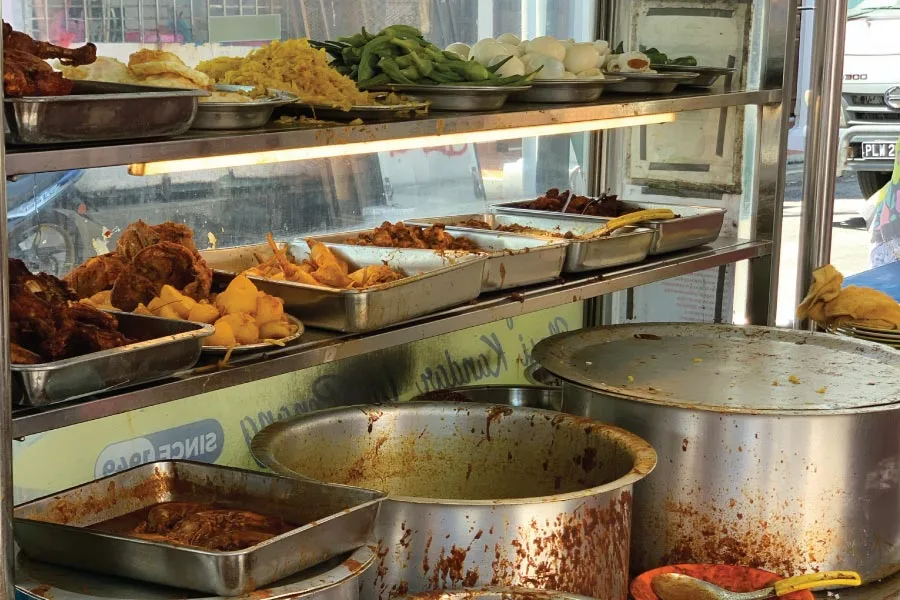
George Town is where most breakfast journeys naturally begin—but it’s also where they can go the deepest. Within its UNESCO-listed streets, mornings unfold through layers of old kopitiams, roadside hawkers, and long-standing stalls that have served generations.
You’ll find kopi being poured in well-worn coffee shops, noodles cooked over charcoal fires, and regulars settling into the same seats they’ve occupied for decades. It’s vibrant, slightly chaotic, and incredibly alive.
Why visit George Town for breakfast:
- Highest concentration of iconic Penang breakfast foods
- Blend of heritage kopitiams and street stalls
- Walkable food trail experience
Highlights:
- Chowrasta Market
- Lebuh Kimberley food stretch
- Carnarvon Street kopitiams
- Cecil Street Market
Best for:
- First-time visitors
- Food hopping in one morning
- Capturing the essence of Penang
Air Itam: A True Local Morning Scene
Air Itam offers a more grounded, local experience—less curated, more real. Centered around its market and surrounding hawker stalls, mornings here are busy with residents rather than tourists. It’s where people come for familiar flavours, quick meals, and reliable favourites.
The pace is fast, the flavours are bold, and the environment feels authentically Penang without any filters.
Why visit Air Itam:
- Strong local crowd (a good sign of quality)
- Affordable, no-frills food
- Authentic market atmosphere
Best for:
- Experiencing everyday Penang life
- Finding long-standing hawker stalls
- No-nonsense, flavour-first breakfast
Pulau Tikus & Tanjung Bungah: Traditional Meets Modern
Pulau Tikus and Tanjung Bungah present a different side of Penang mornings—where traditional markets exist alongside modern cafés. At Pulau Tikus Market, you’ll find classic hawker stalls serving noodles, porridge, and kuih. Just minutes away, cafés offer sourdough toast, specialty coffee, and brunch menus.
It’s a seamless blend of old and new, catering to both locals and a more international crowd.
Why visit this area:
- Diverse breakfast options in one neighbourhood
- Balance between traditional and café culture
- Comfortable, slightly more relaxed setting
Best for:
- Café-style mornings with local options nearby
- Mixing traditional breakfast with modern brunch
- A slower, more curated breakfast experience
Mainland Penang (Butterworth, Bukit Mertajam & Beyond): The Underrated Side
Crossing the bridge reveals a different rhythm. Mainland Penang—especially areas like Butterworth and Bukit Mertajam—offers a breakfast scene that is less explored but deeply rooted in tradition. Here, kopitiams feel older, portions can be more generous, and flavours sometimes lean slightly different from the island.
It’s quieter, more local, and often more personal.
Why visit mainland Penang:
- Less touristy, more authentic
- Hidden gems with long histories
- Slight variations in flavour and style
Highlights:
- Traditional kopitiams in Butterworth
- Bukit Mertajam market breakfast scene
- Old-school eateries with decades of history
Best for:
- Food explorers looking beyond George Town
- Discovering lesser-known local favourites
- A deeper dive into Penang’s food culture
Best Halal Breakfast in Penang
Penang offers a wide range of halal-friendly breakfast options:
- Nasi lemak stalls
- Roti canai and mamak restaurants
- Halal-certified cafés
- Malay kuih vendors
Areas like Gelugor, Bayan Lepas, and George Town have strong halal breakfast scenes.
Café-Style & Modern Breakfast in Penang
If you prefer a slower morning:
- Artisan coffee shops
- Brunch cafés with Western menus
- Fusion breakfast concepts
Popular in:
- George Town
- Tanjung Bungah
- Batu Ferringhi
Tips for Exploring Breakfast in Penang
- Go early: Many stalls sell out by 9–10am
- Bring cash: Most hawkers don’t accept cards
- Follow the crowd: Busy stalls usually mean good food
- Try multiple spots: Build your own breakfast trail
- Be open-minded: Some dishes may be unfamiliar—but worth it
FAQ: Breakfast in Penang
What is the most popular breakfast in Penang?
Penang Hokkien Mee, nasi lemak, and roti canai are among the most popular choices.
What time do people eat breakfast in Penang?
Typically between 6:30am and 10:00am, depending on the stall.
Is Penang good for breakfast?
Yes—Penang is one of the best places in Malaysia for breakfast due to its variety and cultural depth.
Are there vegetarian breakfast options?
Yes—options include chee cheong fun, certain kuih, and vegetarian nasi lemak or noodle dishes.
Where do locals eat breakfast in Penang?
Mostly at hawker centres, kopitiams, and neighbourhood markets rather than tourist cafés.
Final Thoughts: A Morning Worth Waking Up For
Breakfast in Penang is not just about eating—it is about experiencing the rhythm of the island.
From the clatter of plates in kopitiams to the aroma of charcoal-fired woks, mornings here tell stories of heritage, community, and everyday life.
If you want to truly understand Penang, start with breakfast.